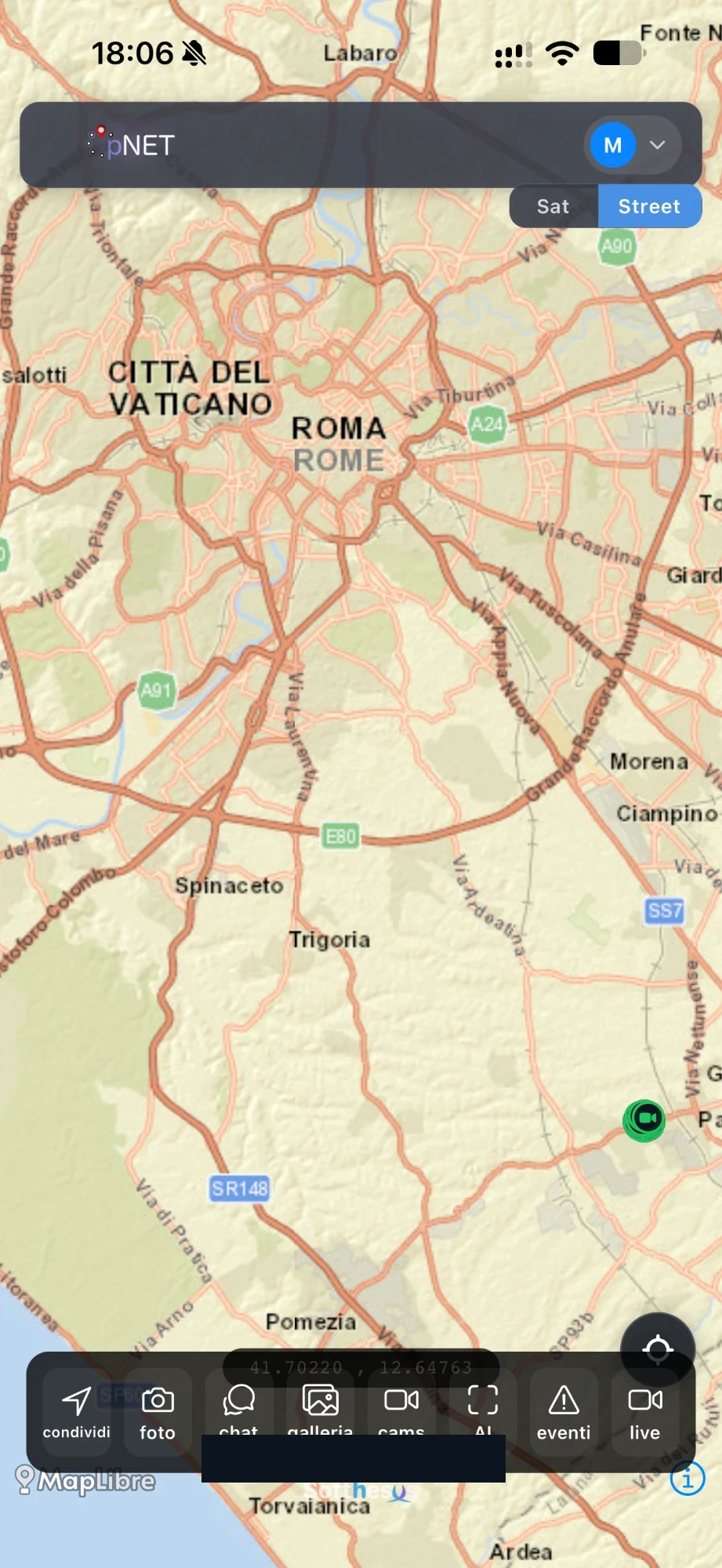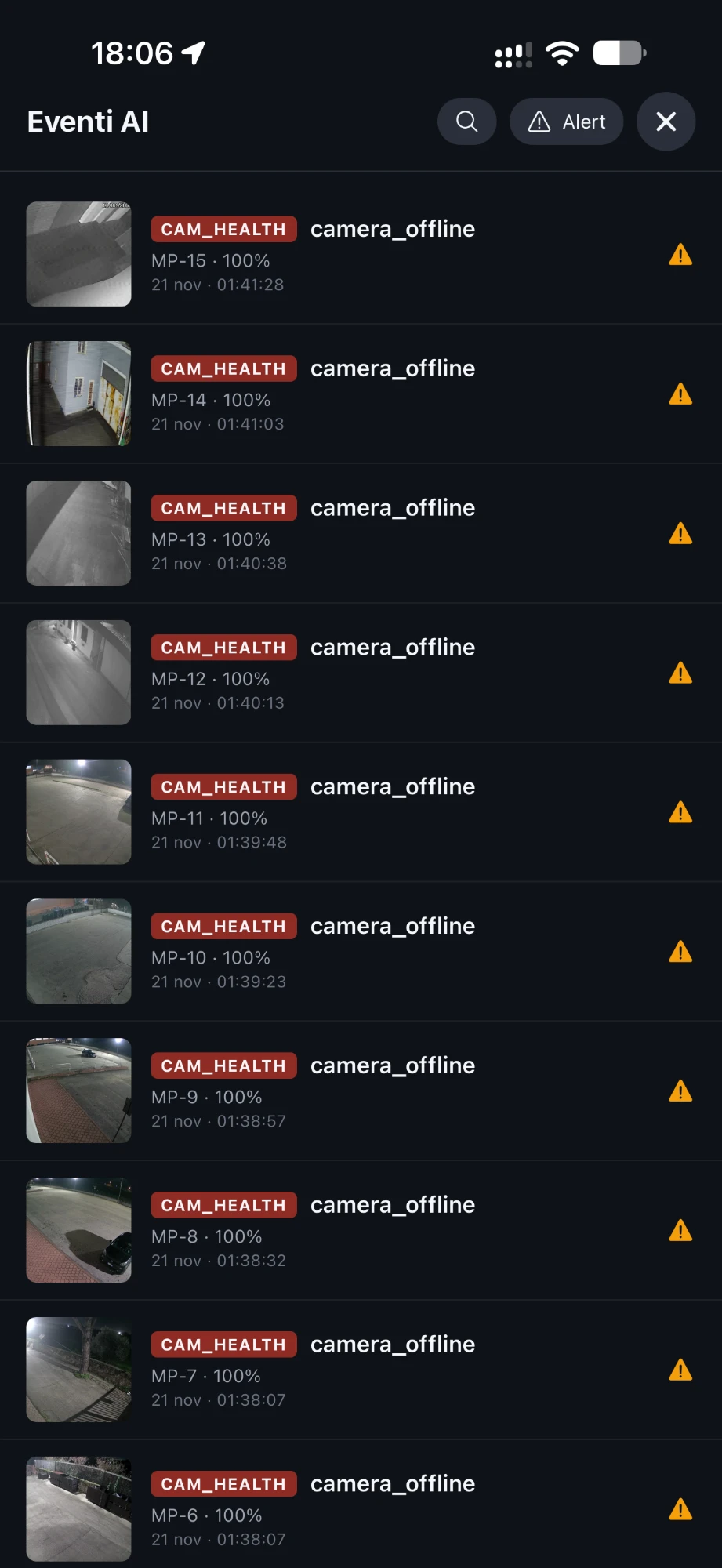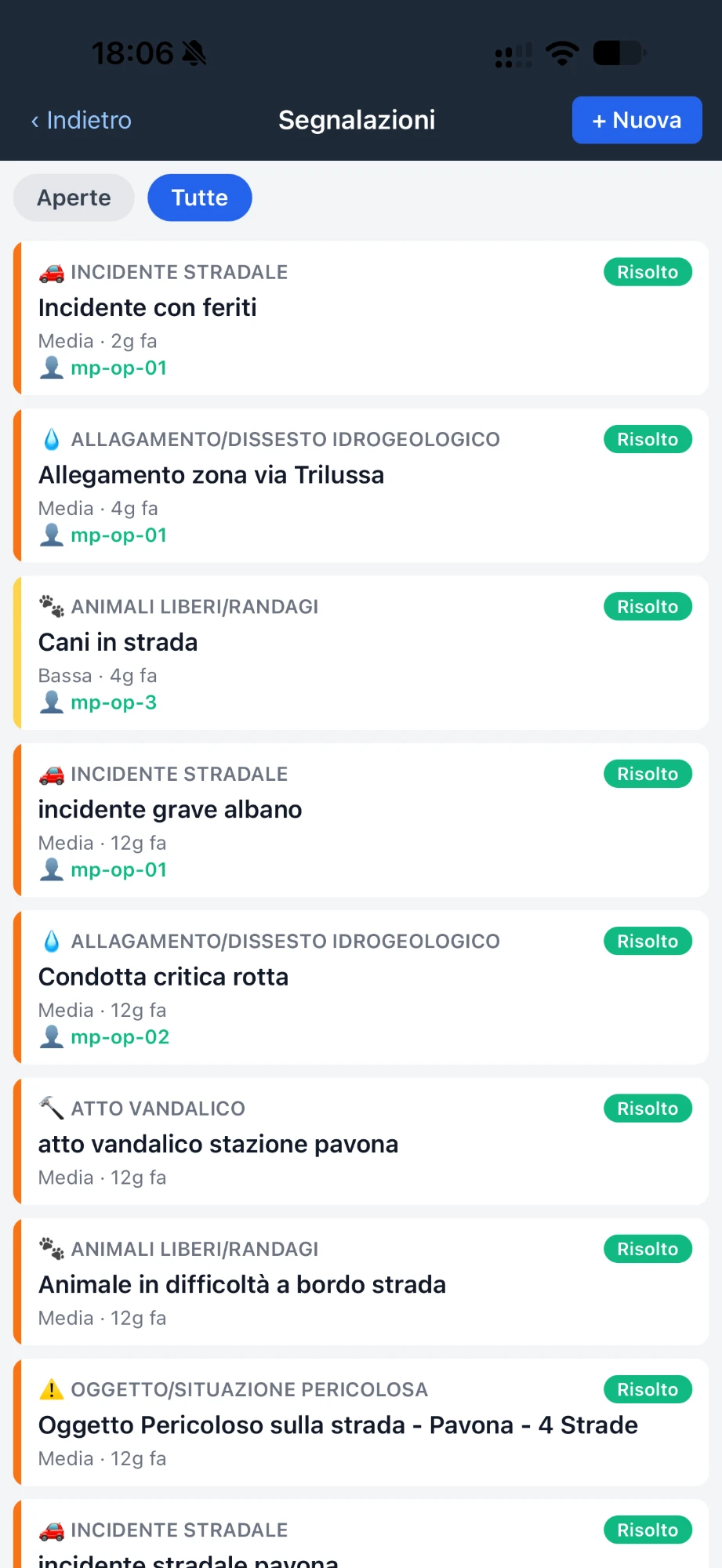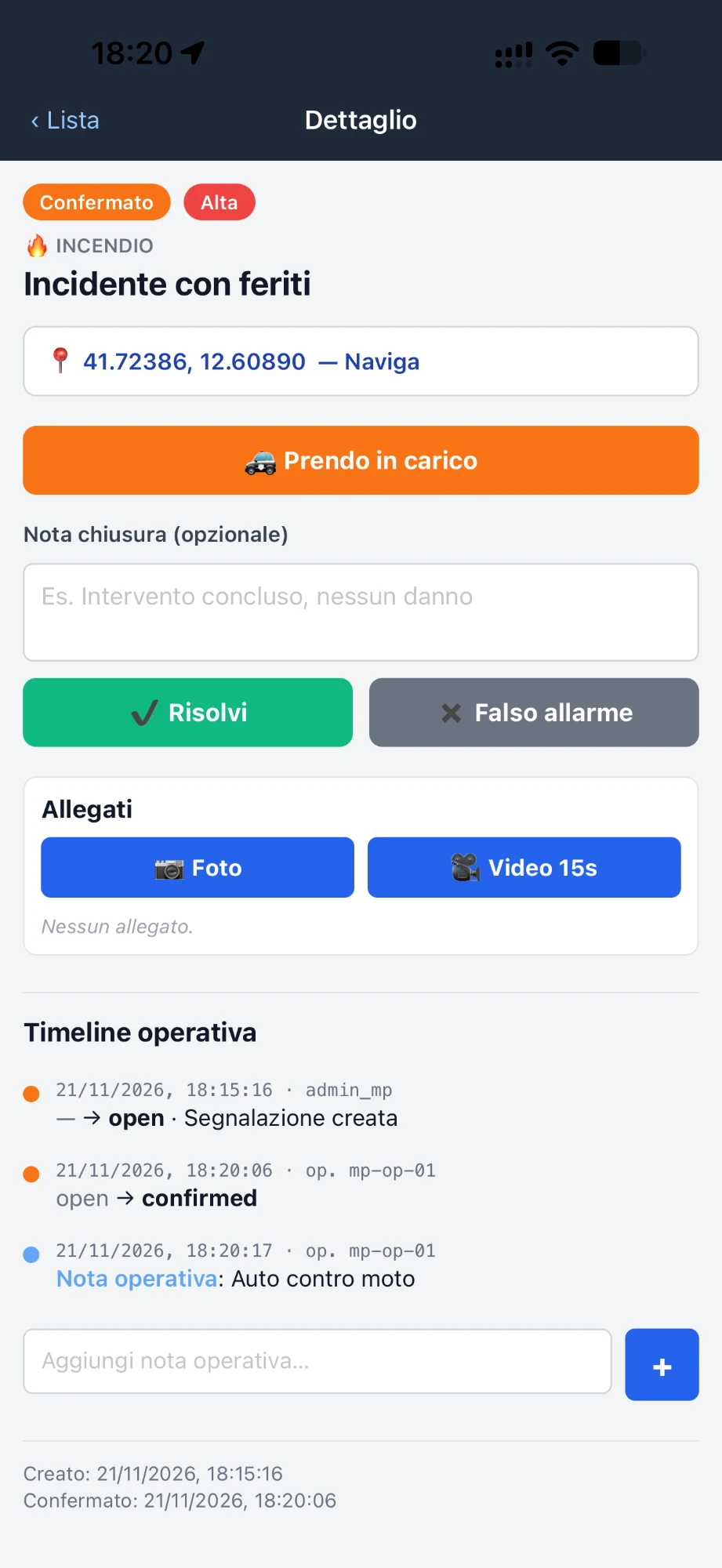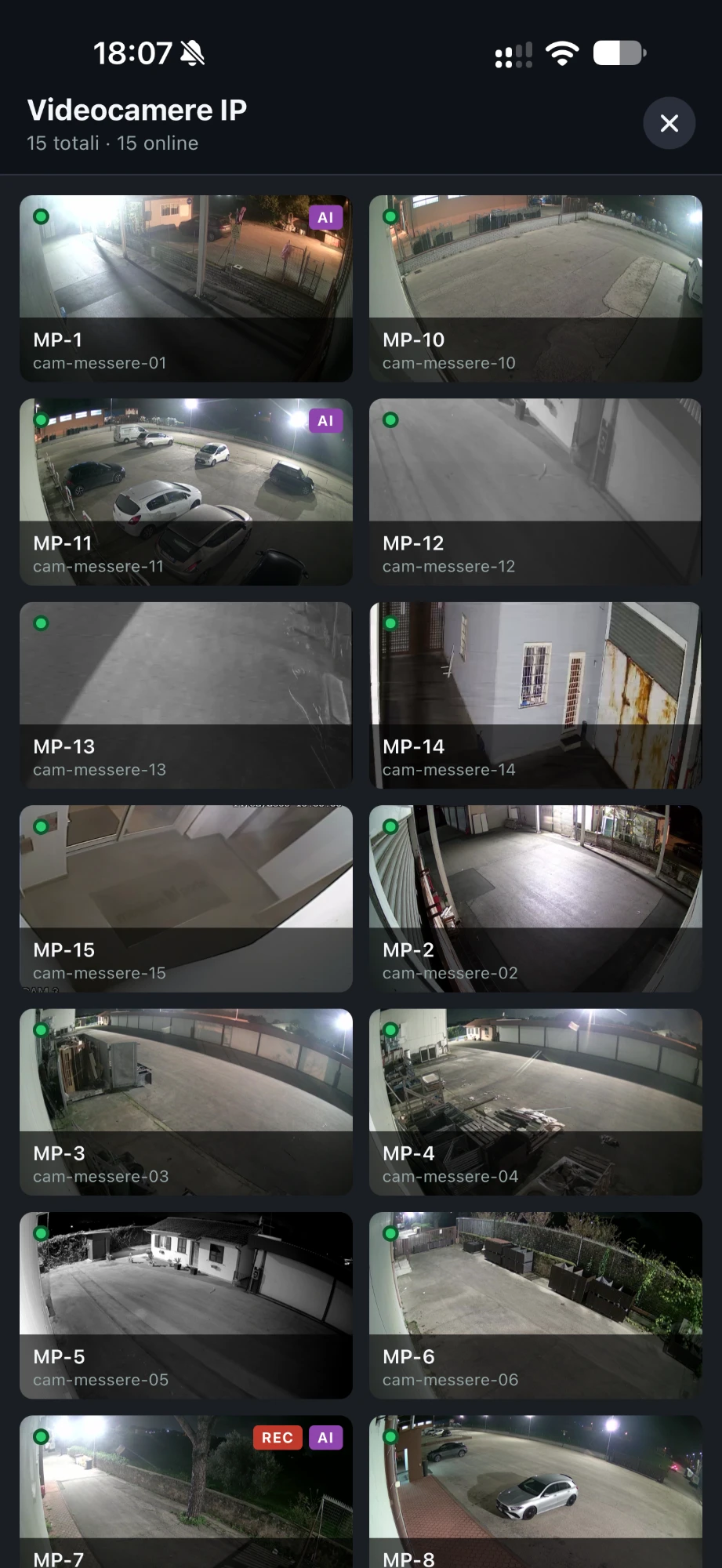
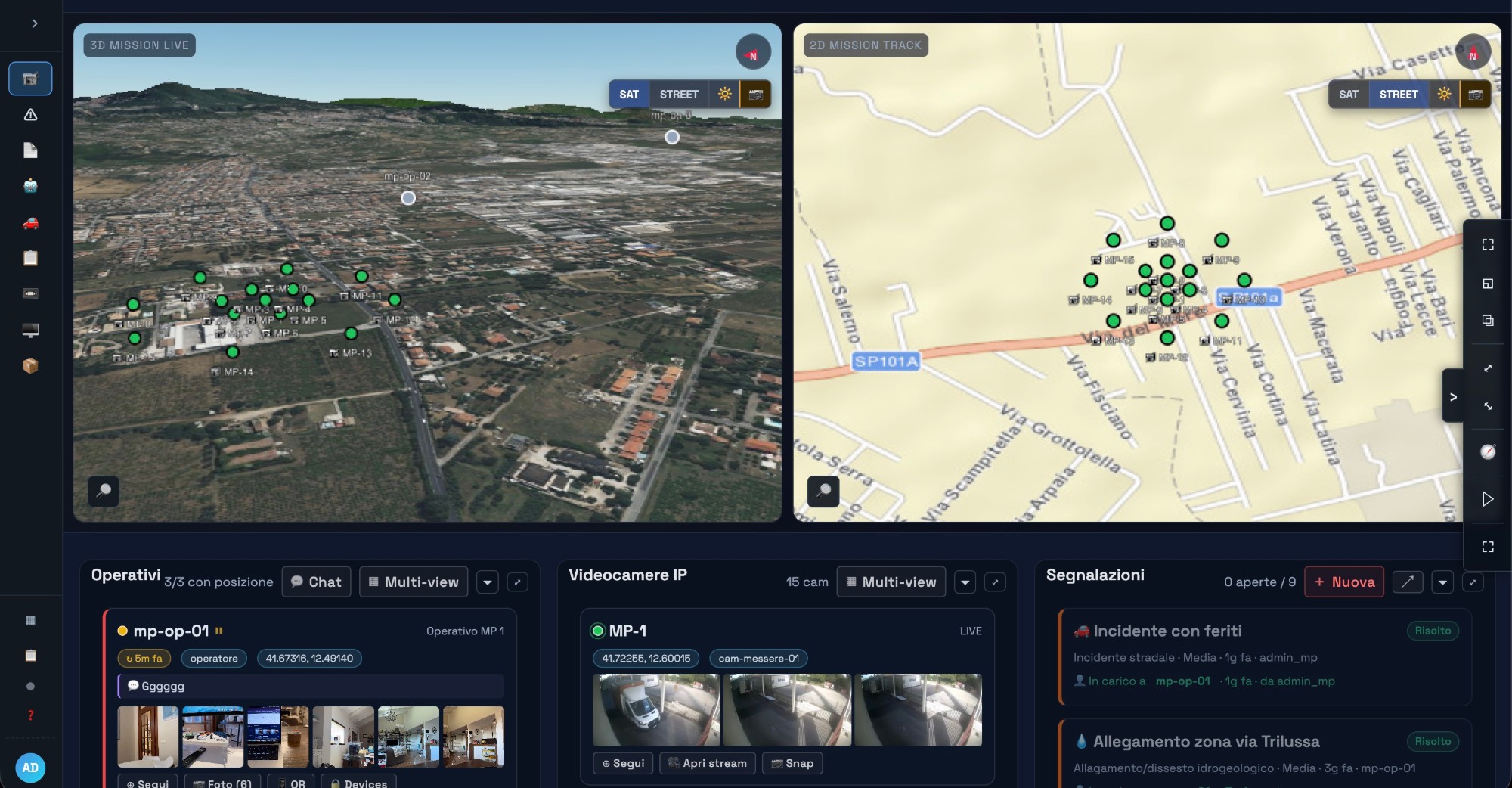
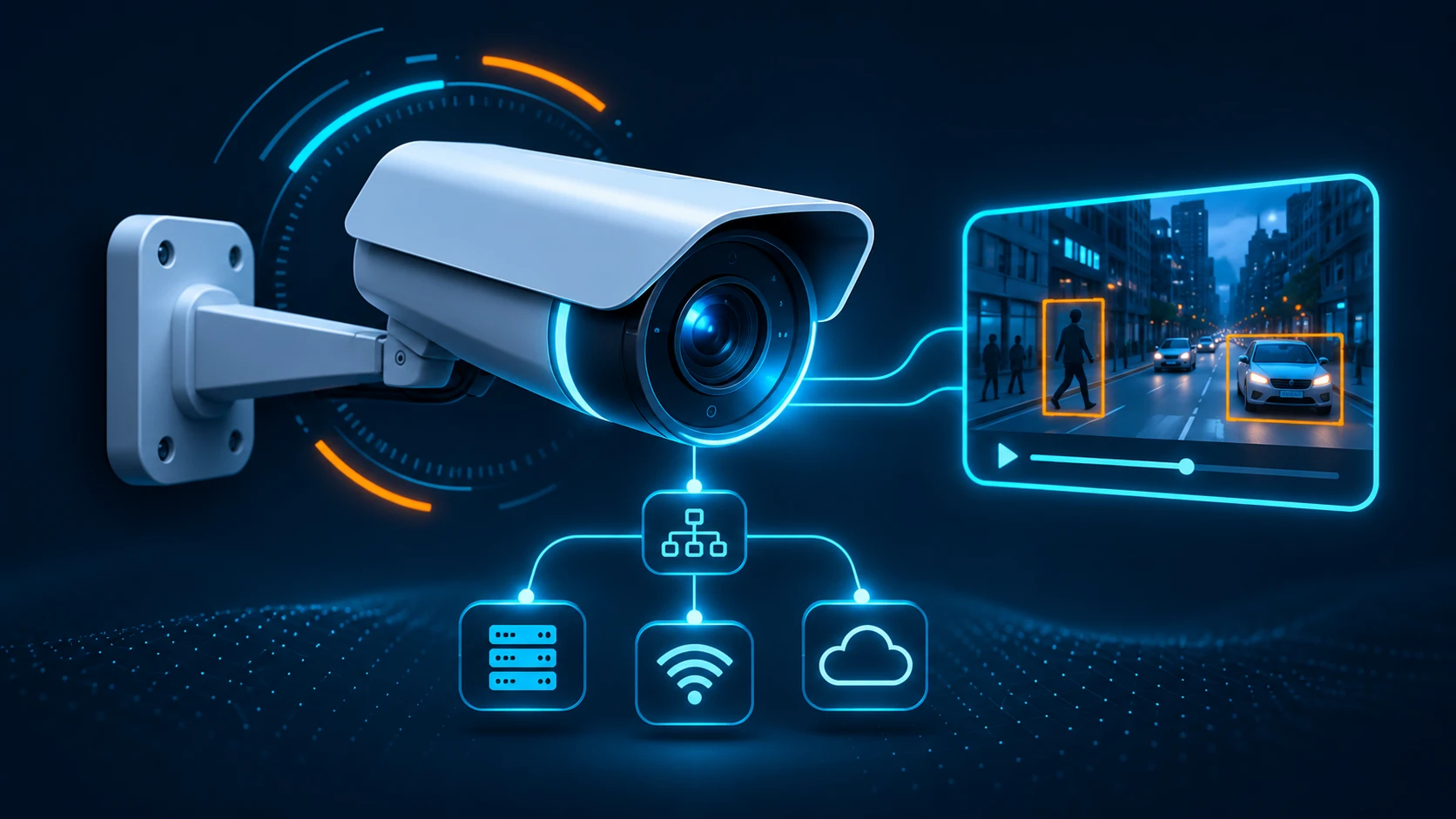
Compatible with any standard IP camera. No hardware replacement, your existing infrastructure comes into the control room.
Italian Command & Control
Decisions from the control room.
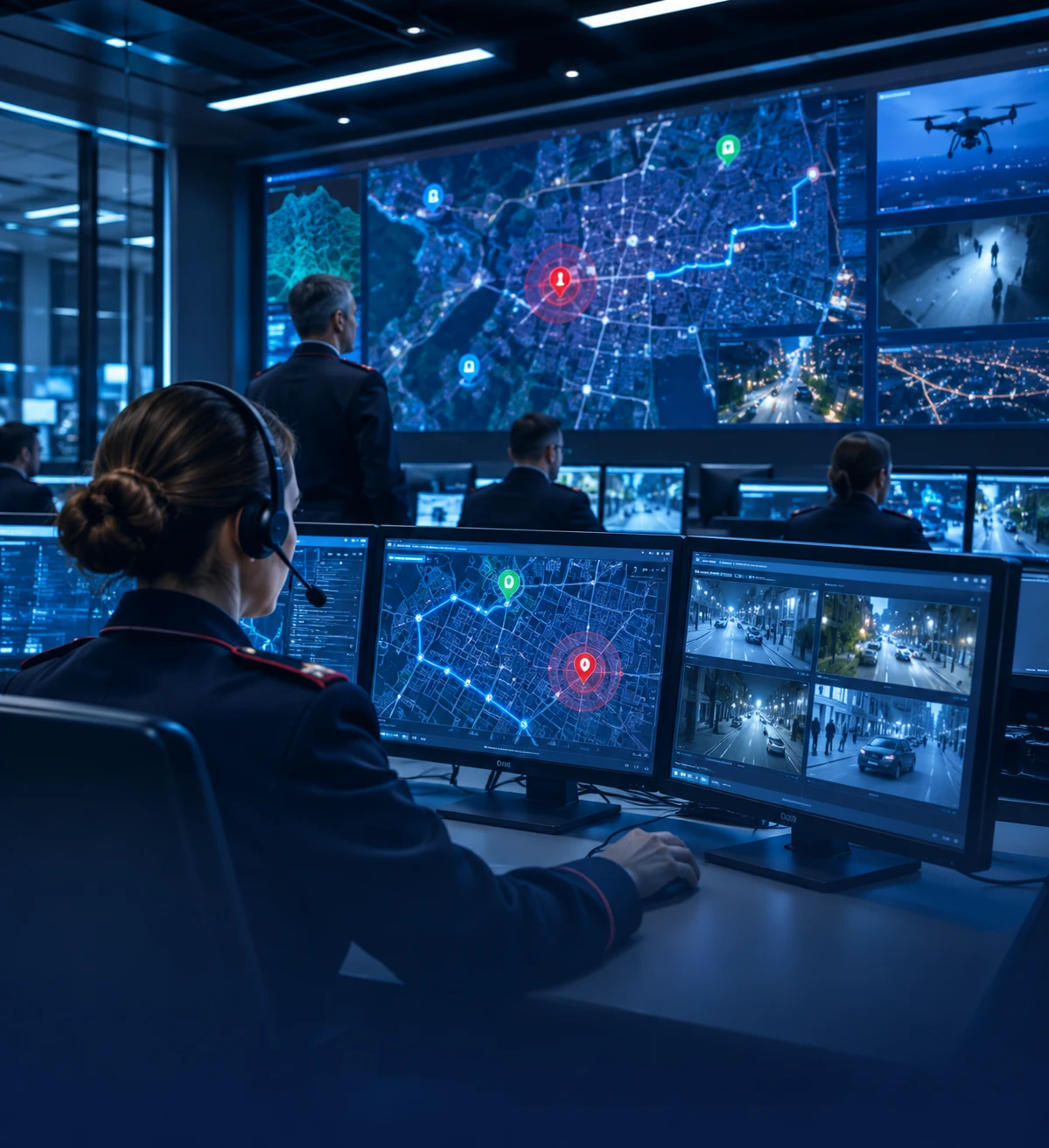
Operators, patrols, IP cameras, drones and targets on a single map shared between control room and field. See where they are, what they see, what happened. Coordinate the response in seconds, not phone calls.
Cameras
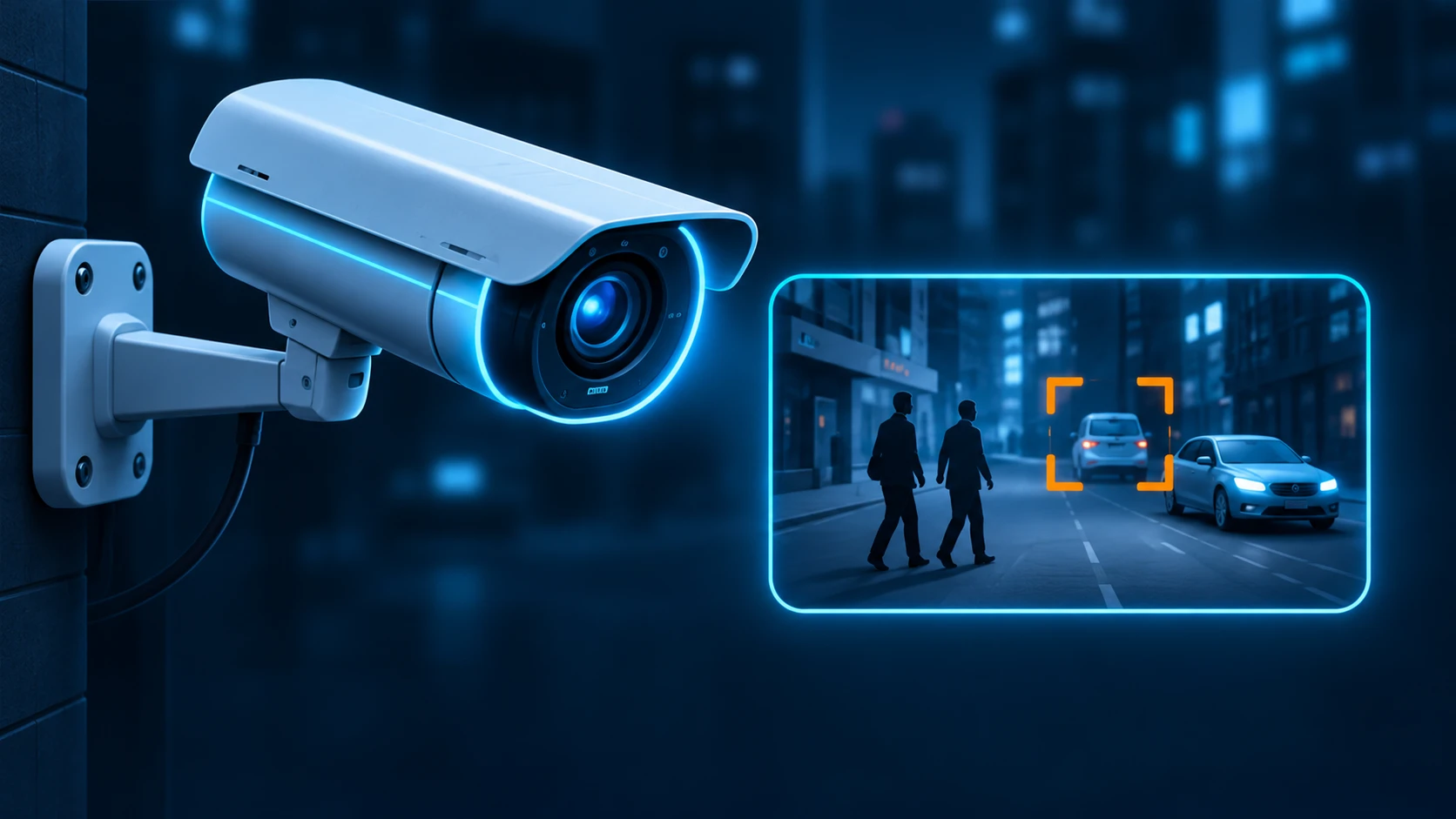
Compatible with any standard IP camera.
No hardware replacement: existing video surveillance joins the OpNET chain with zero changes to the infrastructure. Live feed and on-demand replay of recordings, with OpNET authentication and zone-based permissions.
Drones
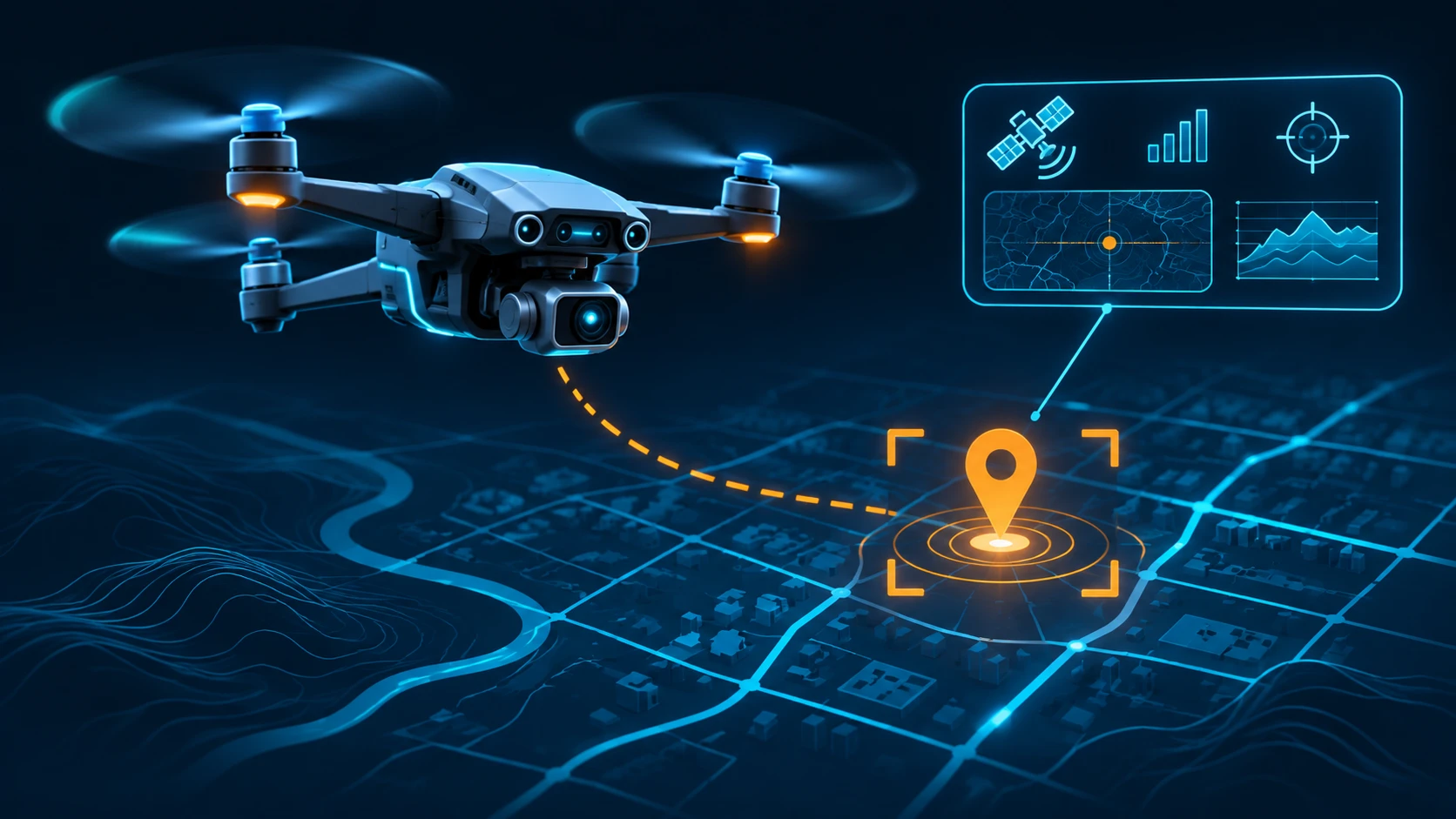
Structured source of information, not just video.
Automatic detection of points of interest, target coordinate calculation, geolocated photos shared across the network to all assets — in the field and in the control room.
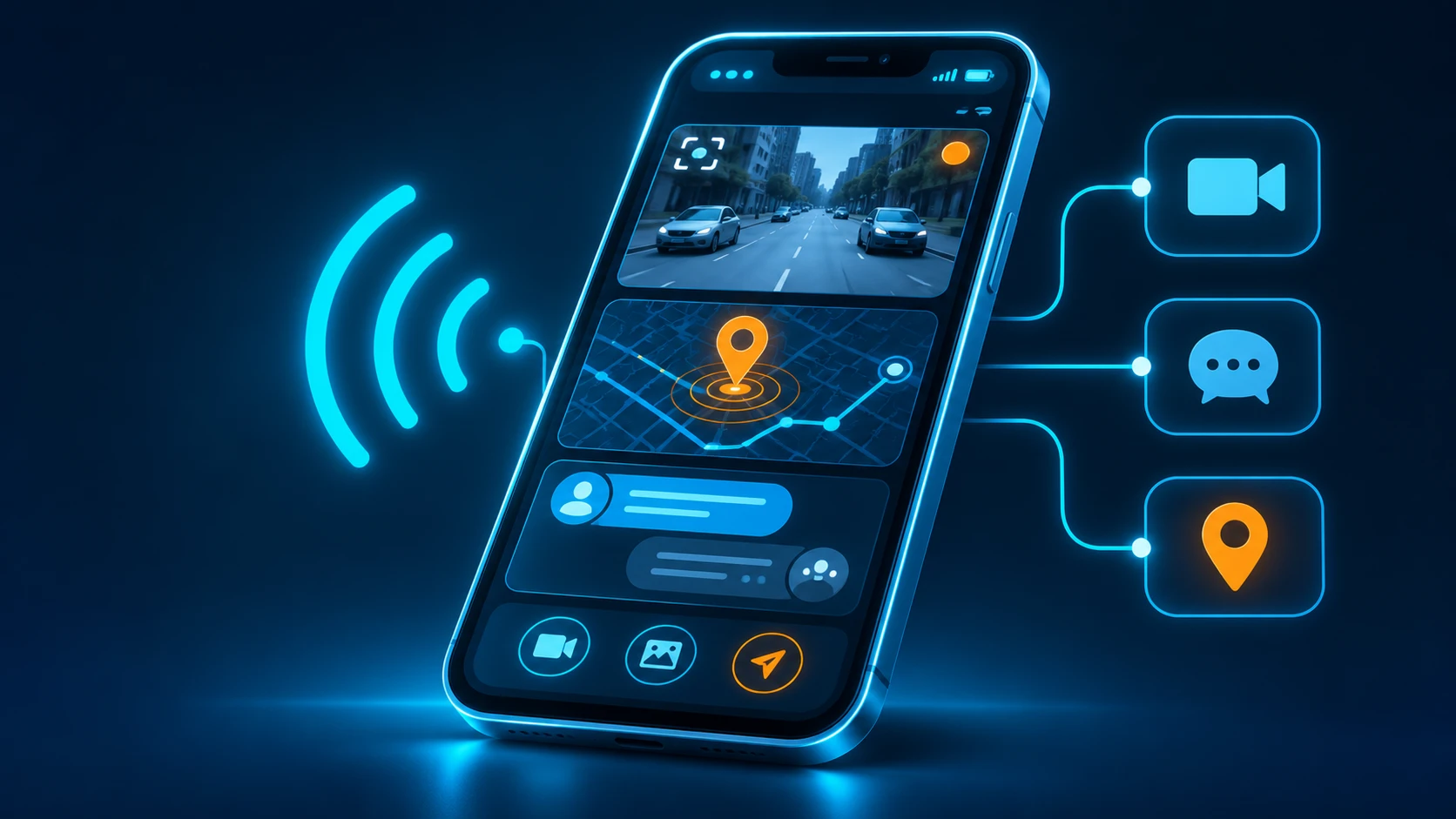
Mobile app
Native for iOS and Android.
iOSAndroid
Two-way live video (smartphone↔nearest IP cam). Zone chat with target assignment and dispatcher broadcast. Georeferenced photos with position, time and author: feed mission picture and debriefing. GPS position per second even in background and with screen off, via native wake-lock. Activation in 15 minutes via QR bootstrap.
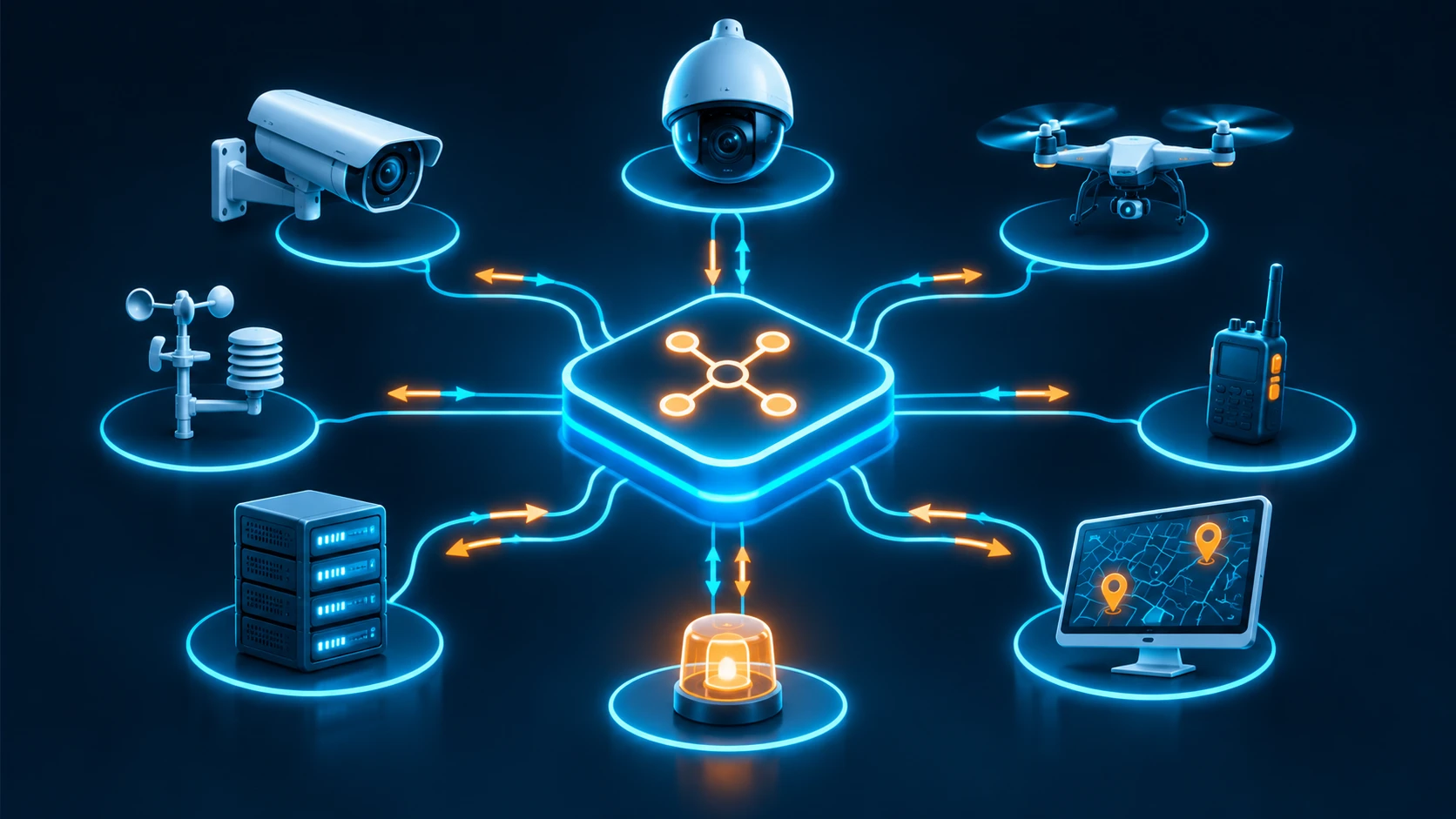
Integration with existing systems
Two-way dialogue with what is already in the control room.
Management systems, CAD, tactical tablets, VMS: no silos, everything flows into the shared operational picture.
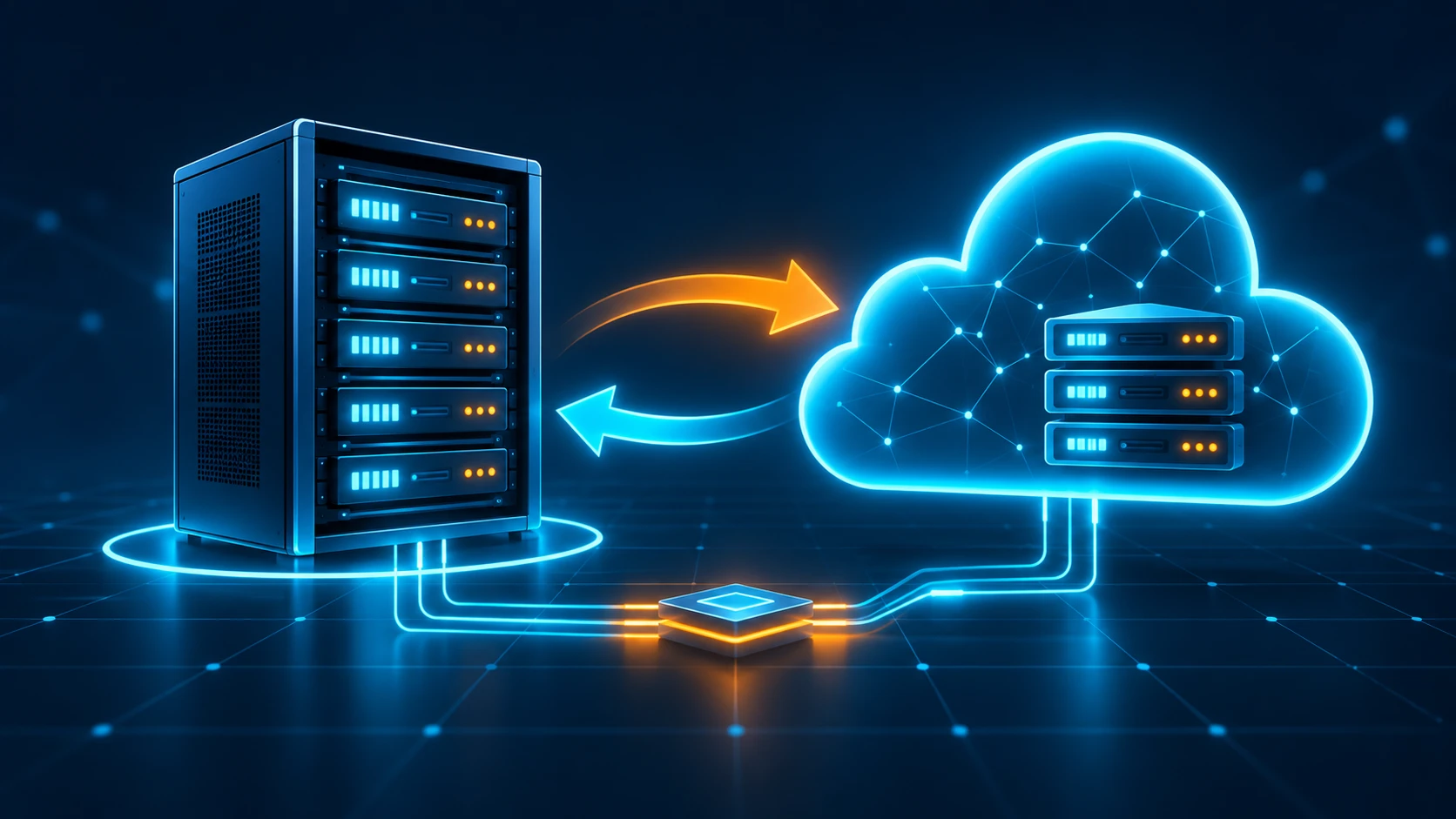
On-premise or cloud
In your local network or in OpNET cloud.
Server inside the perimeter with closed firewall for sensitive contexts, or OpNET cloud for fast deployments. Mode selectable based on operational context.
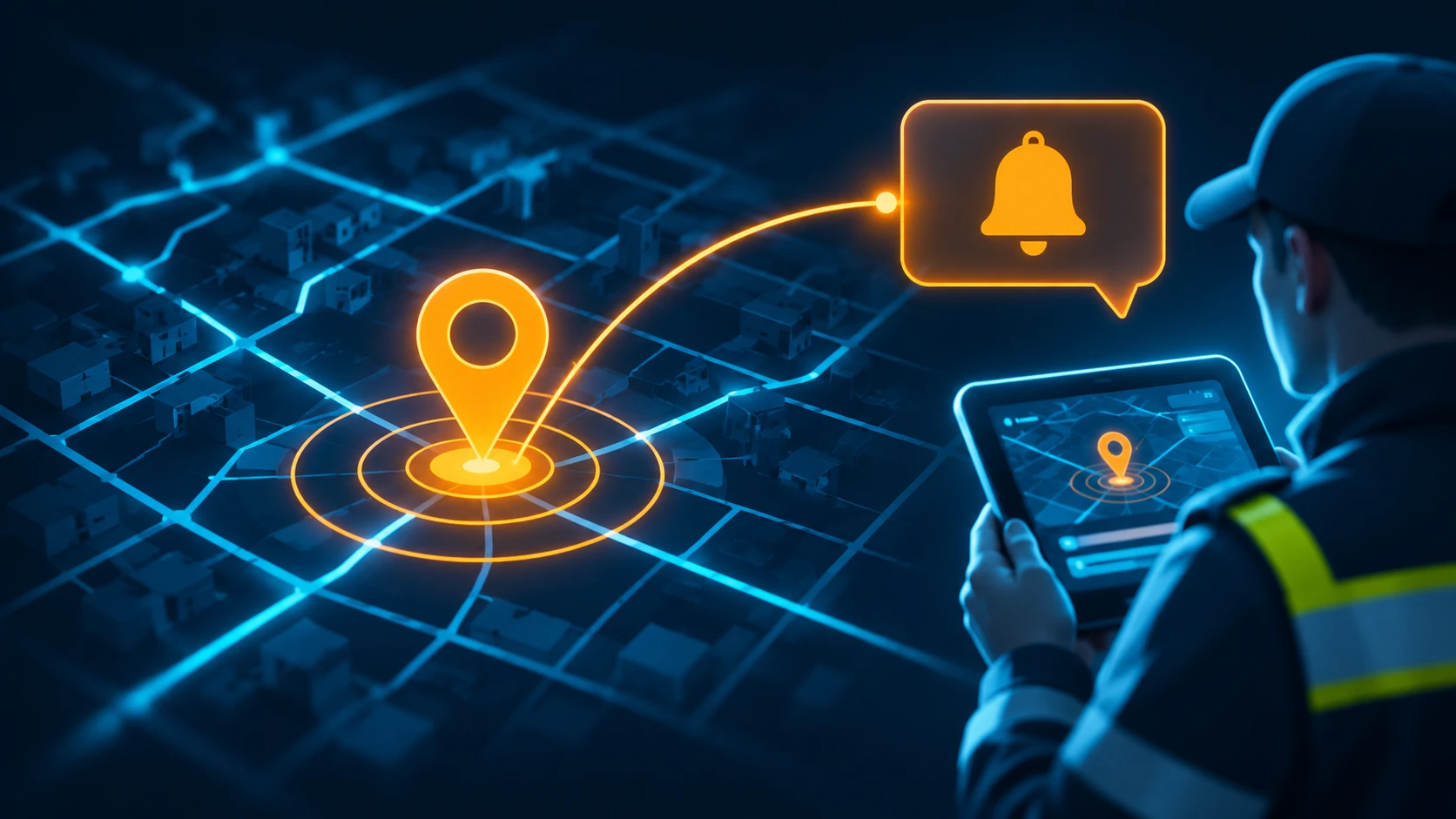
Smart notifications
Push per assigned zone, iOS and Android.
Only pertinent alerts for the operator's assigned zone, no blind broadcast. Filter by team, role and area.
Artificial Intelligence
Detects people and vehicles, verifies feed authenticity.
Detection on IP cams, extraction of points of interest and coordinates from drone video, qualification of field reports. Integrated in the flows already going through OpNET, not a separate module.
Five needs of an operations center.
Five concrete answers.
Regardless of context, those who coordinate field resources face the same baseline problems. Here is how OpNET addresses them.
One control room, not five consoles.
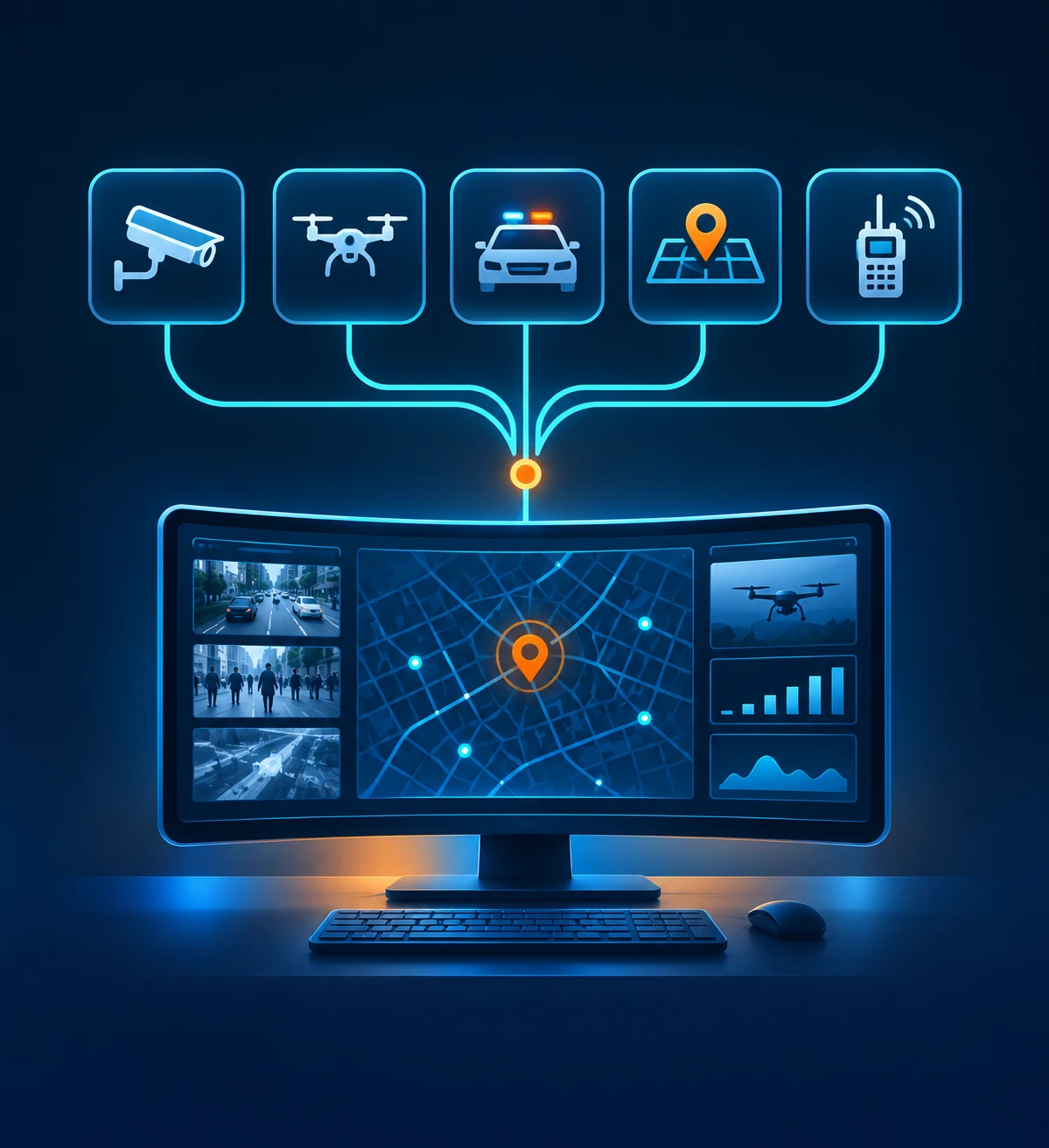
One view, not five logins.
Today the control room has VMS, management software, chats, maps, operator mobile apps: each with its own login, console, language. OpNET consolidates video surveillance, operators, drones, targets, reports and chat in a single live view, without necessarily replacing existing systems: it connects them and makes them talk.
AI watches the cams, live and in archive.
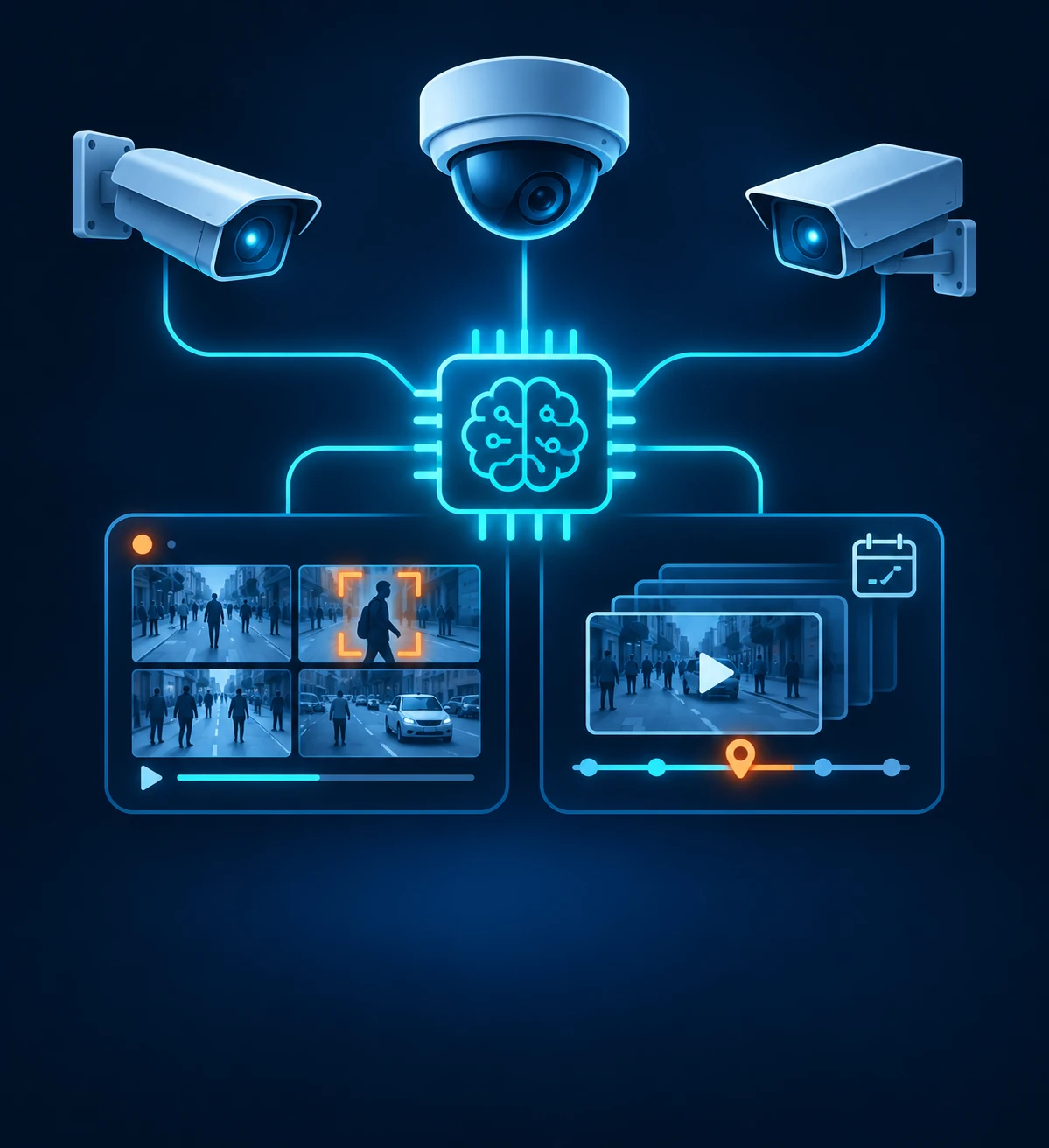
AI that never gets distracted.
No dispatcher can monitor twenty cameras without attention drops. OpNET automatically detects people, vehicles, zone intrusions, obscured targets and offline cams: direct alert to the closest operator, with snapshot. And in archive: fast, targeted post-event analysis with search on segments of interest. No more scrolling through hours of recordings.
From the report to the response, in seconds.
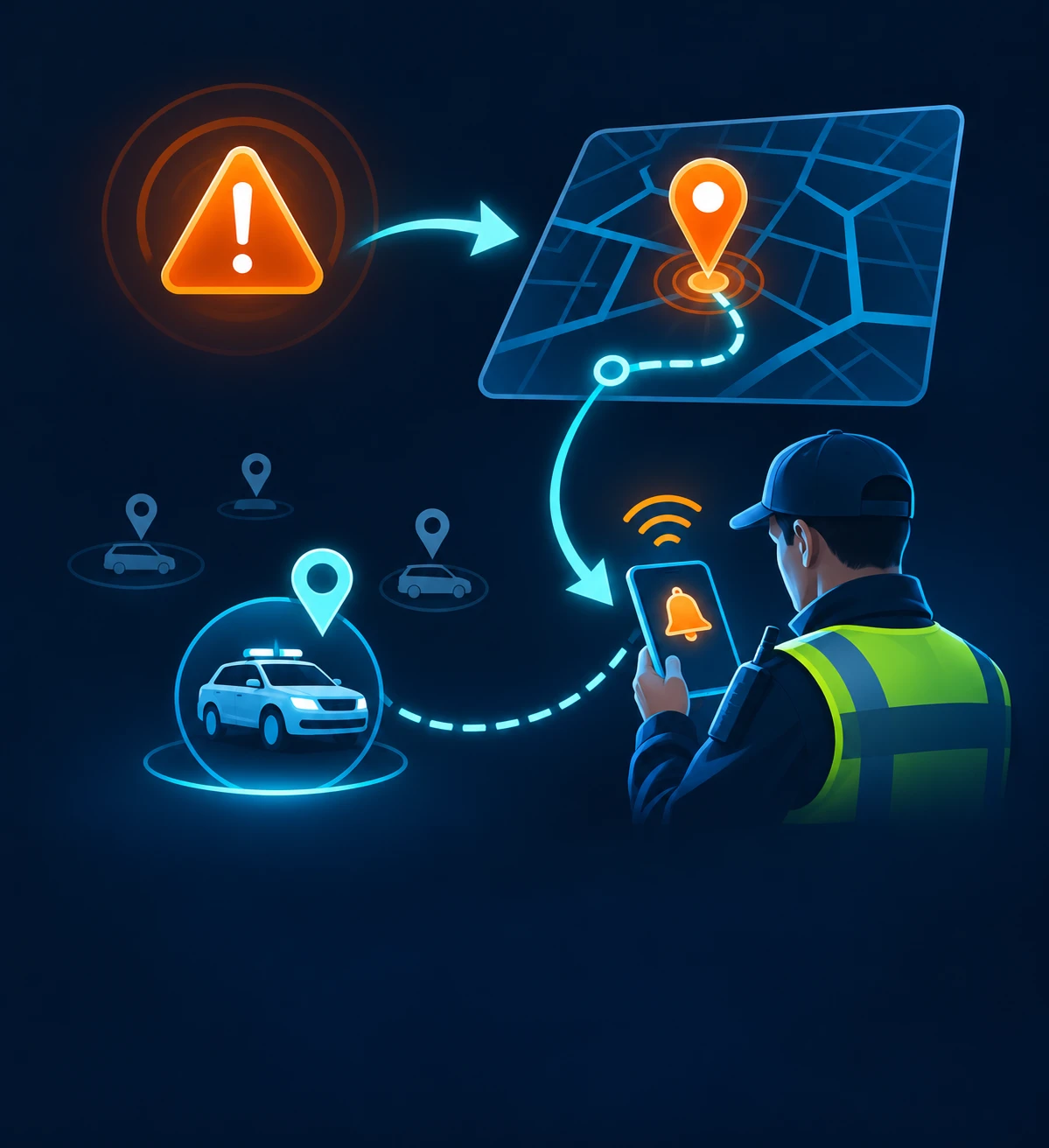
The closest operator, already alerted.
A detection, a call, a citizen push: OpNET identifies the closest operator by position, sends targeted push notification with snapshot and details. No generic radio broadcast, no voice coordination, no time lost figuring out who covers what.
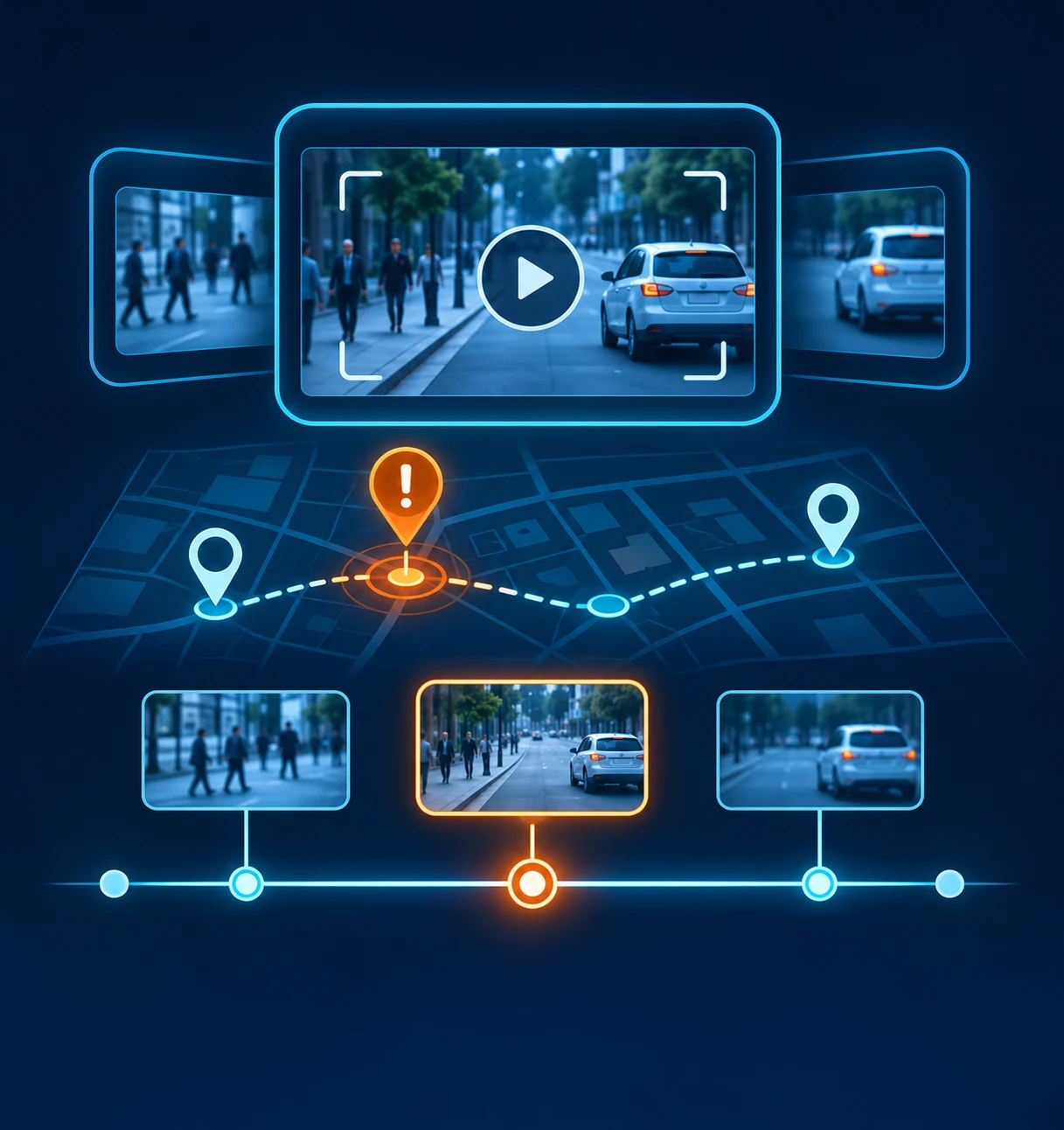
Review it, don't reconstruct it.
Synchronous timeline of everything.
Every action in the control room, every operator position, every video feed, every chat: all recorded on a synchronous timeline. For debriefing, for a judicial request, for GDPR audit, to learn from last time — what remains is a snapshot of what really happened, not reconstructed from memory.
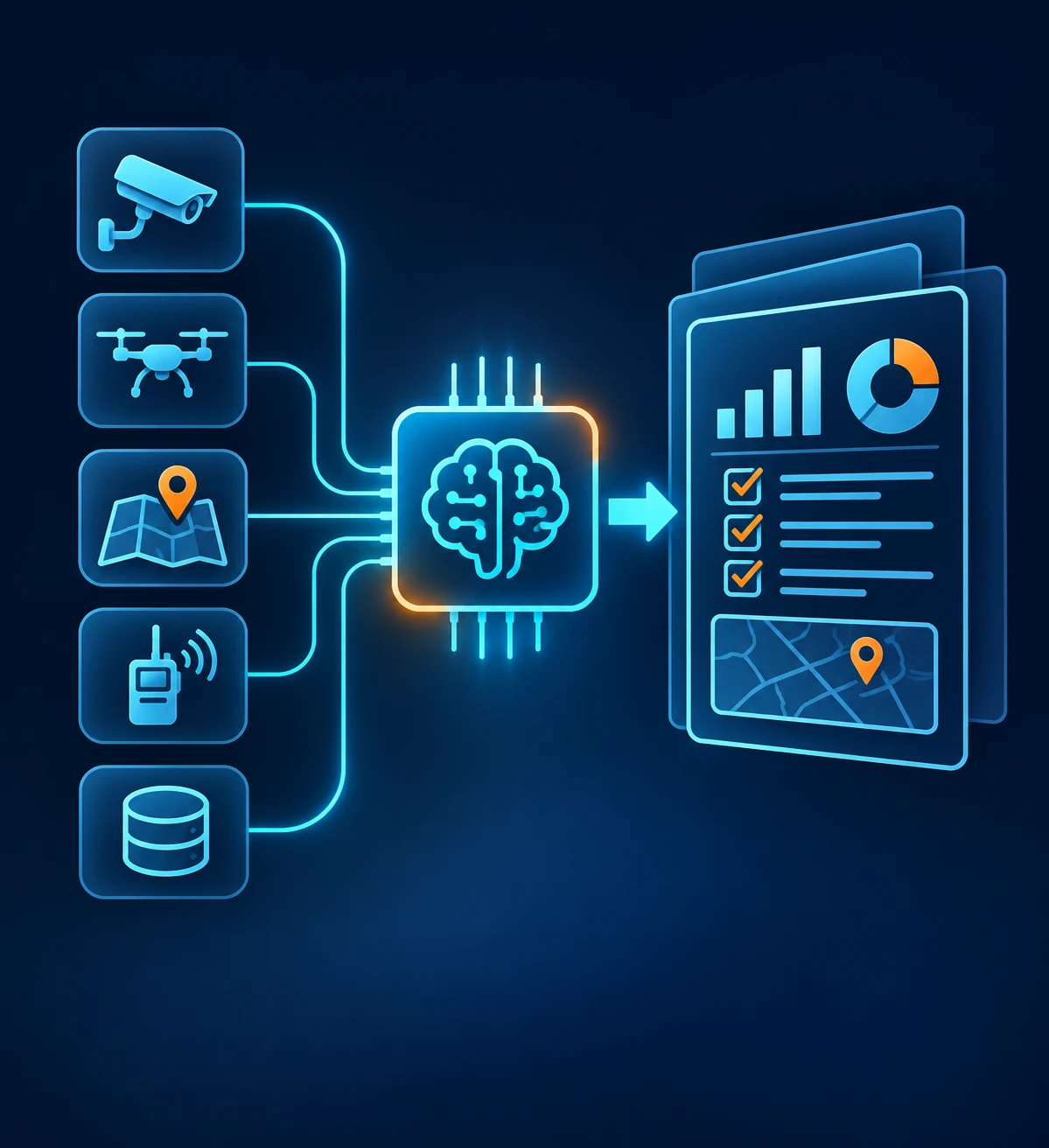
Automation and reporting with AI.
Reports that write themselves.
Shift scheduling, reports on incidents and events, extractions for the commander, recurring forms: OpNET reduces manual processes with automation and AI assistance. Command time optimized, operators free to stay in the field instead of in front of a form.
Built for every operational context.
Each control room has its own flows, assets and priorities: start from a solution already shaped for yours.
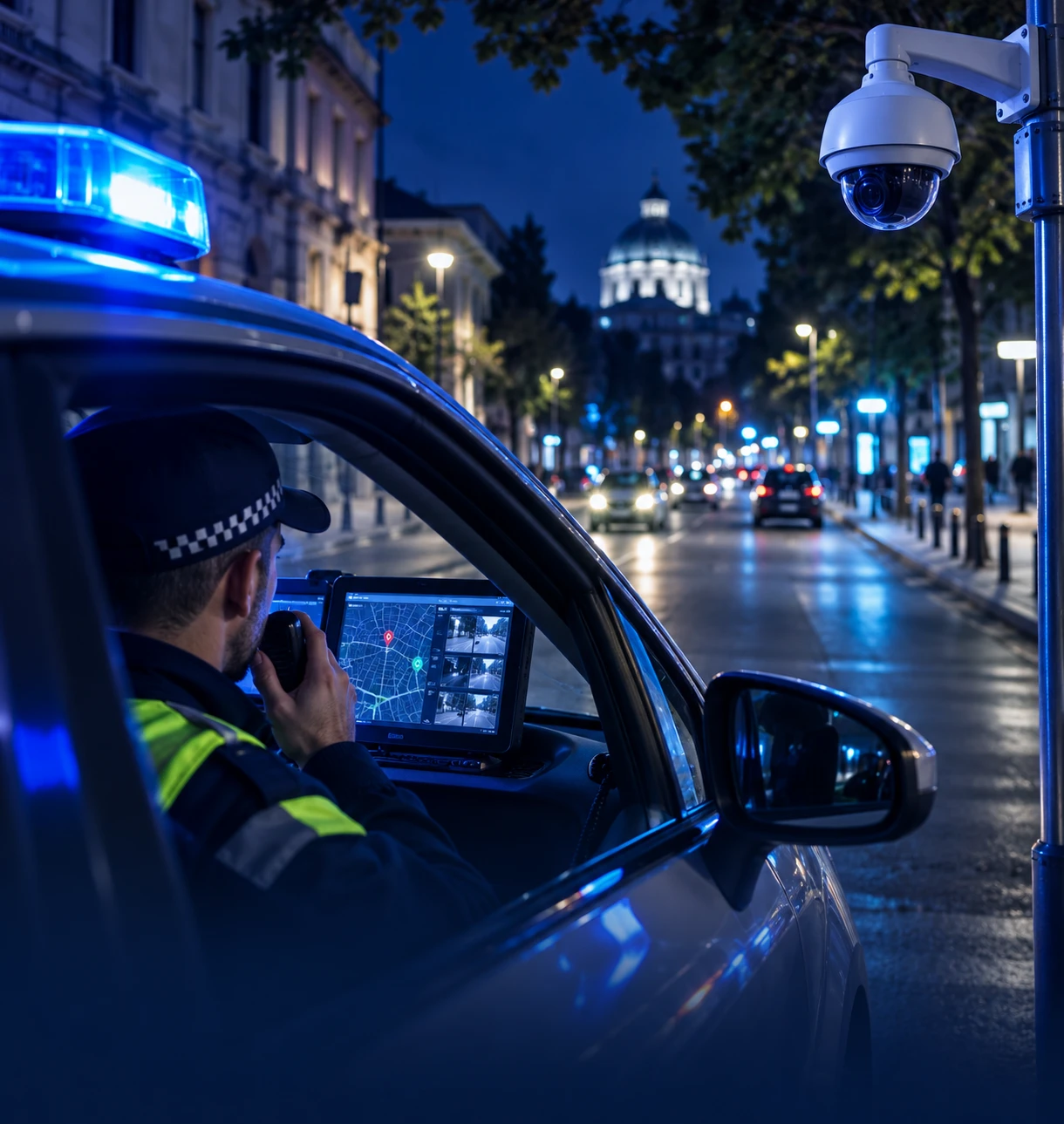
Local Police
One command, one map.
Urban patrolling, zone control, video surveillance integrated with patrols on the map.
PatrolsIP camsLive AI
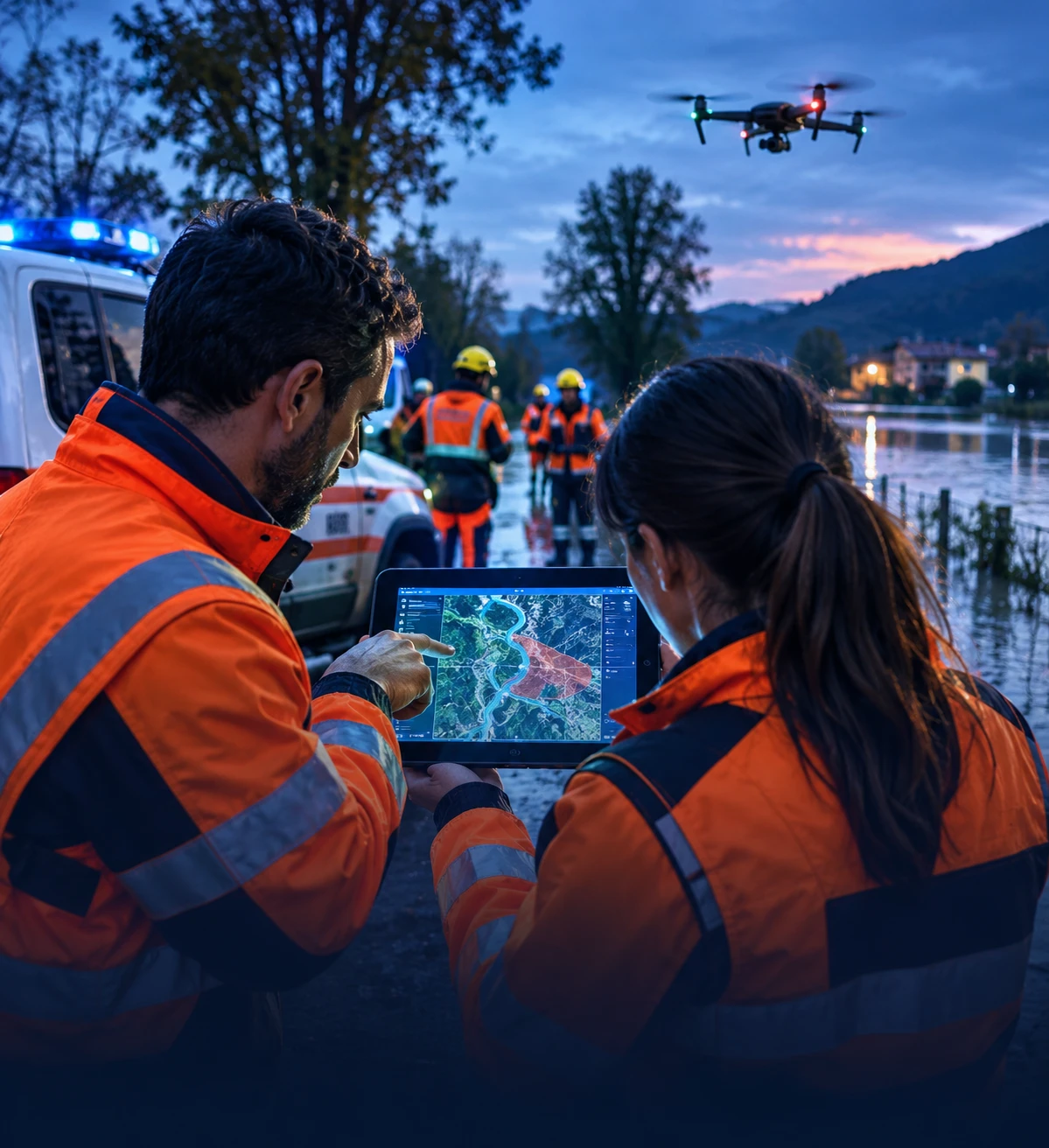
Civil Protection
A municipal operations center ready for the next crisis.
Flood, fire and earthquake emergencies: teams, reconnaissance drones and broadcast chat.
TeamsDronesReports
Police Forces
Operations with shared direction.
Common operational picture, dynamic targets, synchronous video debriefing.
MissionsTargetsDebriefing
One network, several agencies.
Local Police, Civil Protection and Police Forces share mission picture and critical resources when needed. Each agency stays in control of its data — and chooses what to share, with whom, for how long.
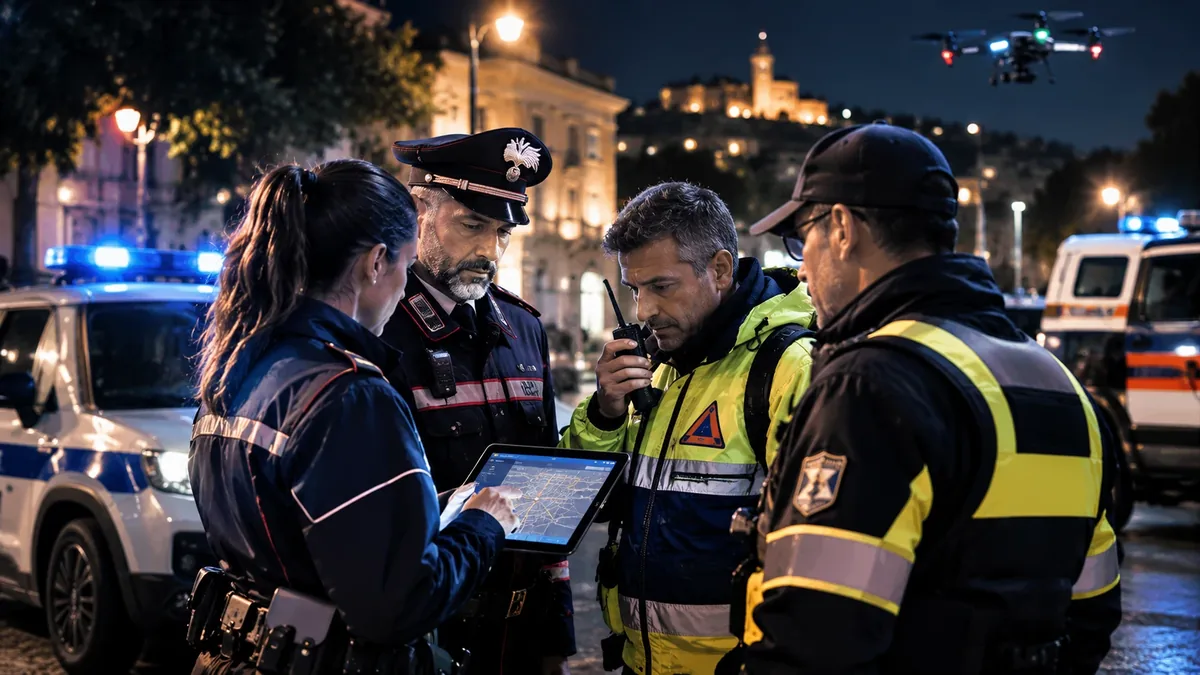
01 / Night coverage
Local Police is not 24/7. The territory is.
Outside Local Police service hours, Police Forces access IP cameras and citizen reports on the OpNET network. Their patrols take charge of interventions directly. In the morning, the Local Police command finds everything archived with a full audit trail.
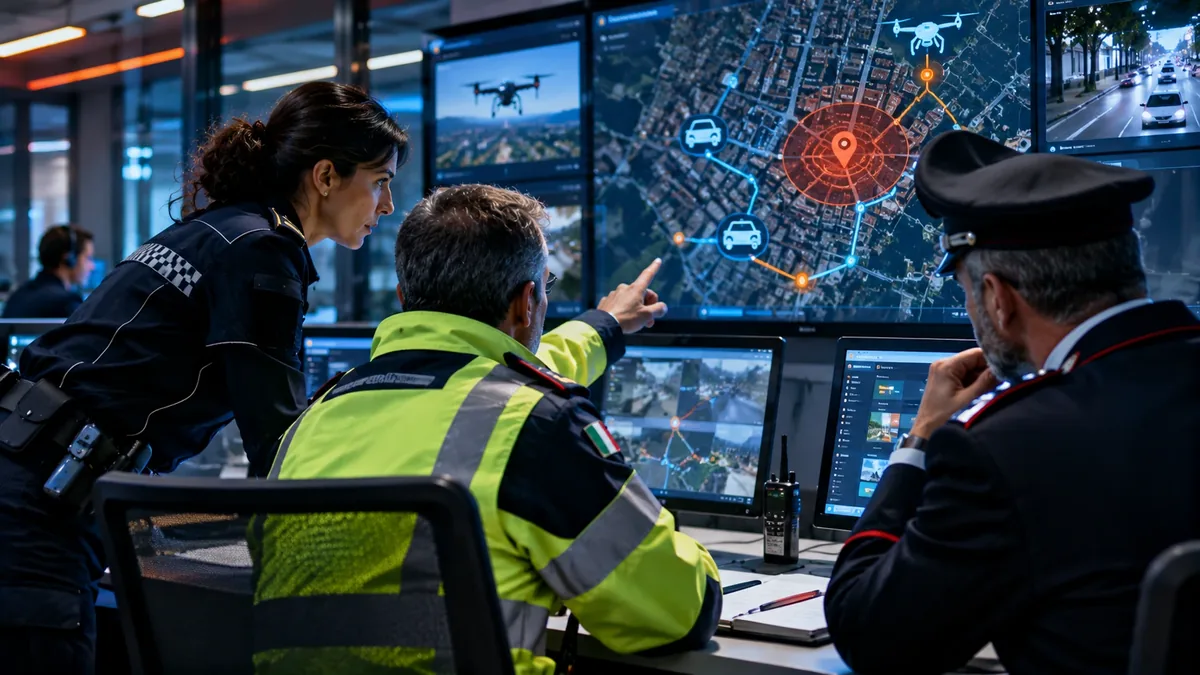
02 / Emergency
The operations center sees beyond its own assets.
During an emergency, Civil Protection accesses Local Police drones, Police Forces cameras on the closed road, and incoming citizen reports. It shares the mission picture with Local Police and Police Forces for logistics, traffic and medical support.
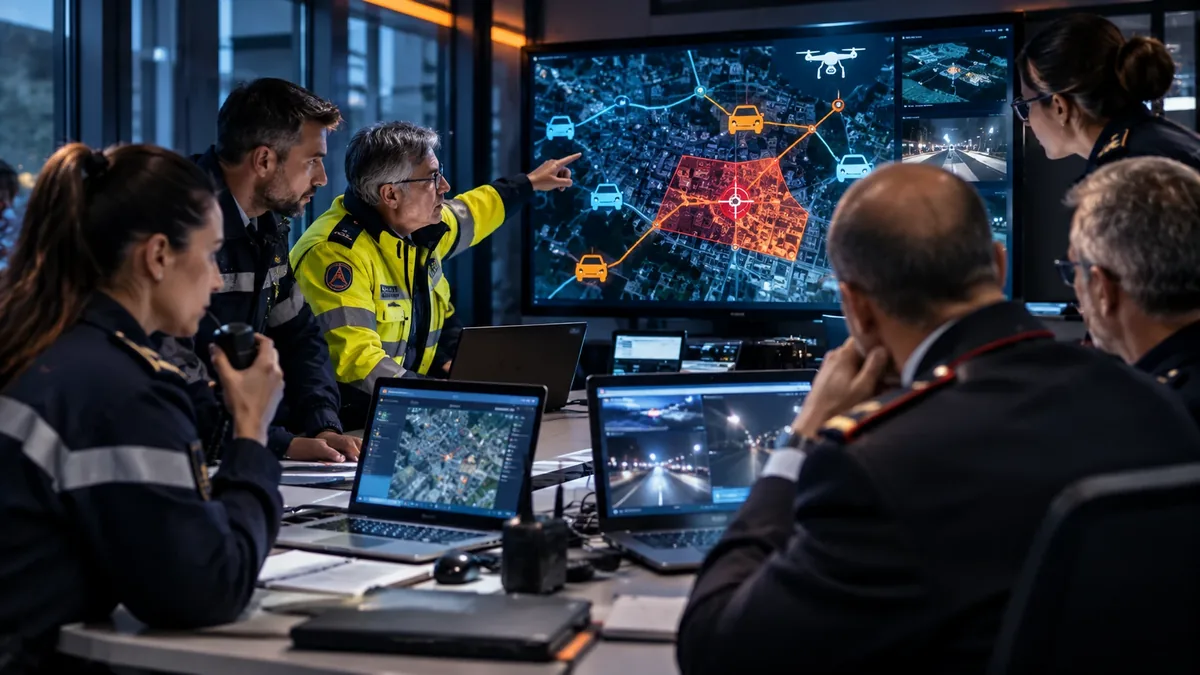
03 / Police Forces operation
Shared zone. Zero interference.
Police Forces units declare their operational zone and critical reports in real time to Local Police (for road blocks) and Civil Protection (for medical support). No double dispatch. No overlap on the ground.
Per-asset granularity
Programmable grant expiry
Read-only or intervention
Immediate revocation
Separate audit per agency
The operations center, extended to the field.
OpNET Mobile app for iOS and Android: the same map as the control room, in the hands of those working in the street. Position updated every second, live video, zone chat, georeferenced photos.
iOSAndroid