Planned operations.
Shared operational picture.

Special units and territorial teams running planned operations: OpNET provides the shared operational picture between control room and field, known and dynamic targets, line-of-sight on 3D map, segregated chat and synchronous debriefing with replay.

Five Control Room challenges.
Below, the five answers.

In Police Forces units, the Control Room coordinates planned operations and missions: briefing, intervention, debriefing. Today it does so jumping between systems, with radio and operator memory. Here is where.

Unit Control Room with management system, target catalog, video and radio on separate consoles
System fragmentation

Five consoles, one Control Room.

Management, targets, video, radio: all separate.

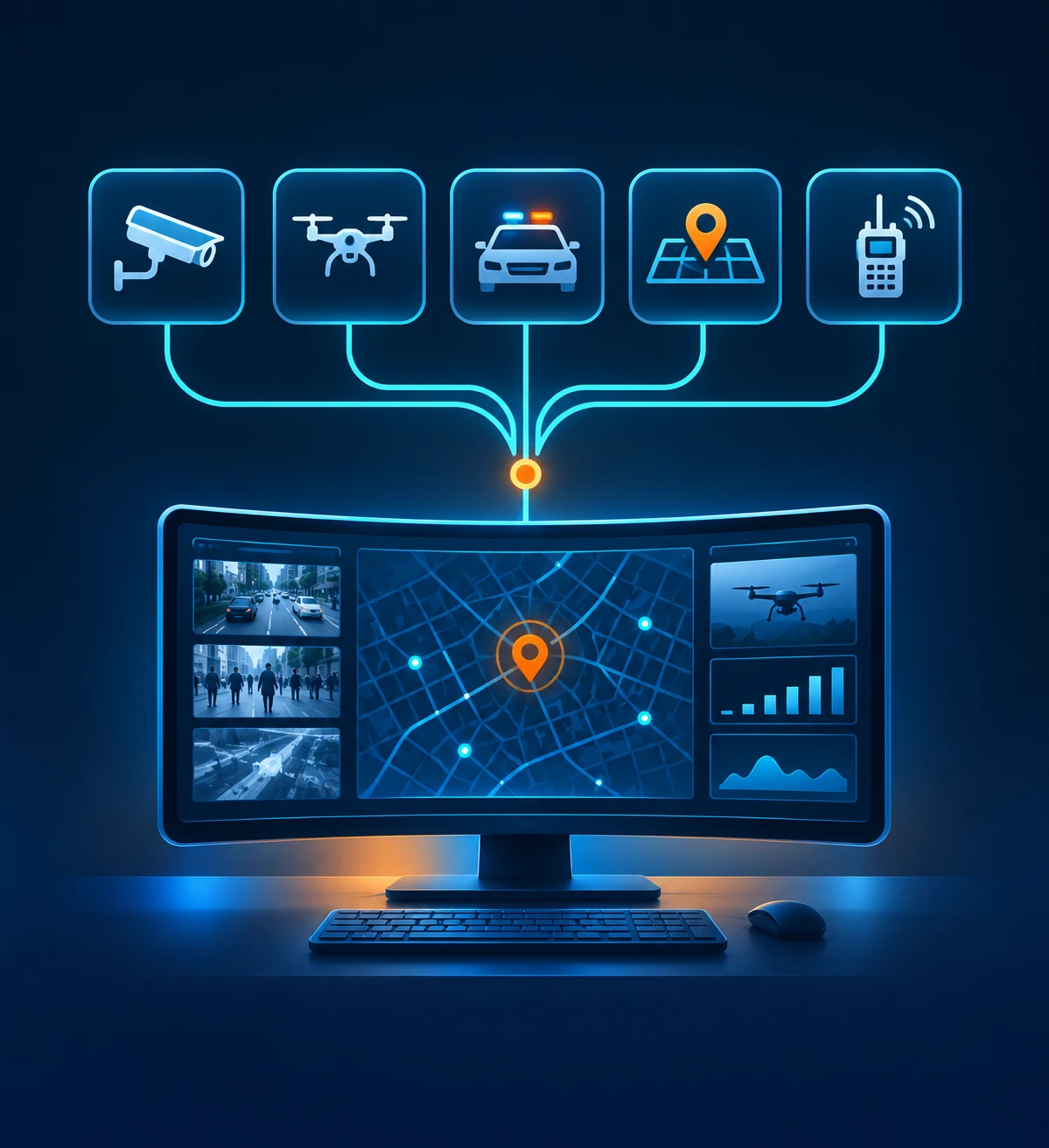
Today in the unit Control Room coexist operational management, target catalog, surveillance video, drone feed, radio: each with its own login. The director jumps between screens during intervention, no one sees the same picture. Decisions are based on fragments.
Pre-operation briefing on static slides and debriefing reconstructed from memory
Manual briefing and debriefing

Briefing on slides. Debriefing from memory.

No synchronous playback of what happened.

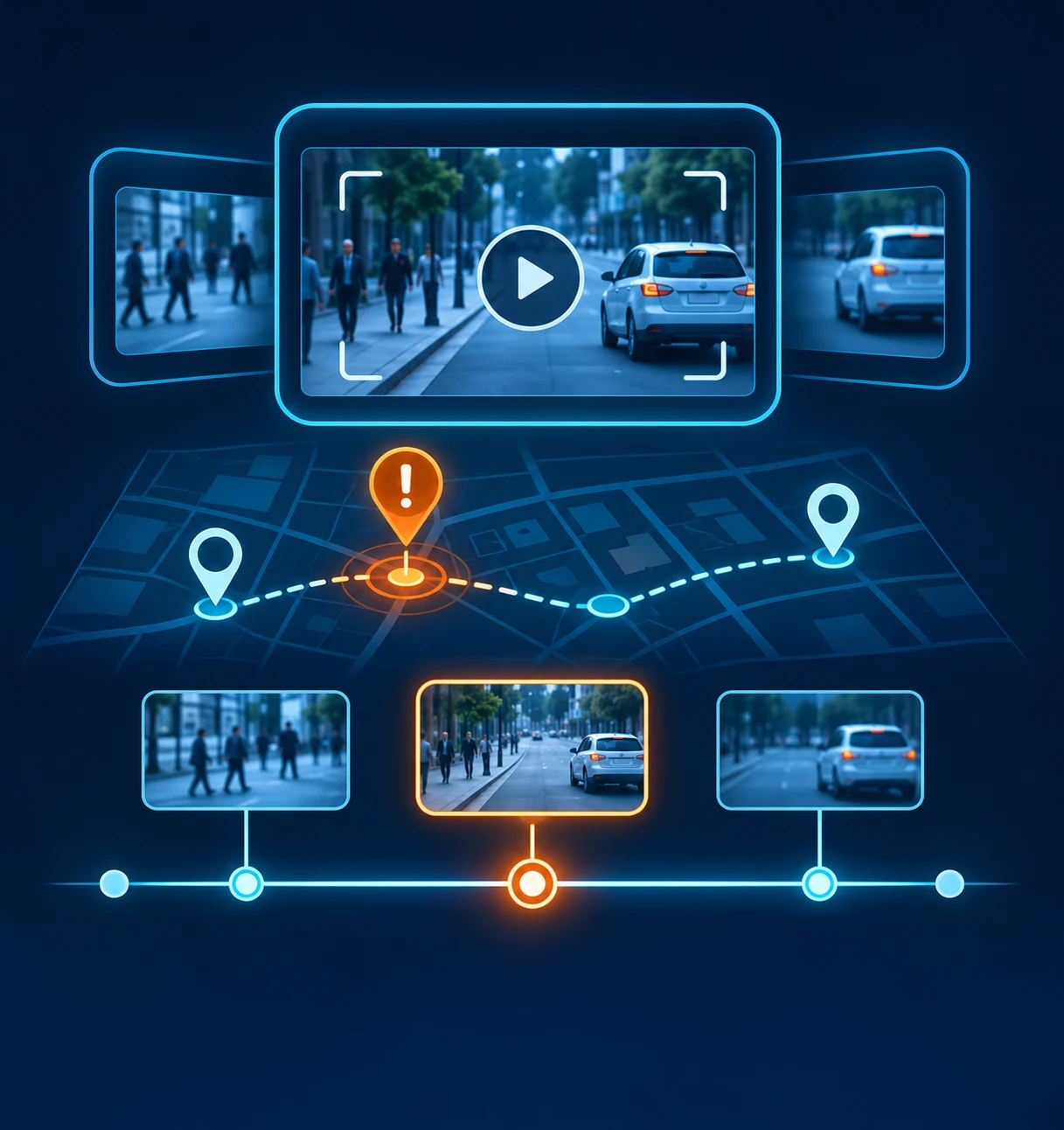
The pre-operation briefing is on static slides: printed map, target photos, verbal team assignment. The post-operation debriefing is a document patched from notes, radio chat, clips downloaded by hand. No synchronous replay of positions, video and communications.

Control Room facing dozens of cams with no AI support
Monitoring by sight

Dozens of cams, few eyes in the room.

The event is discovered after, not during.

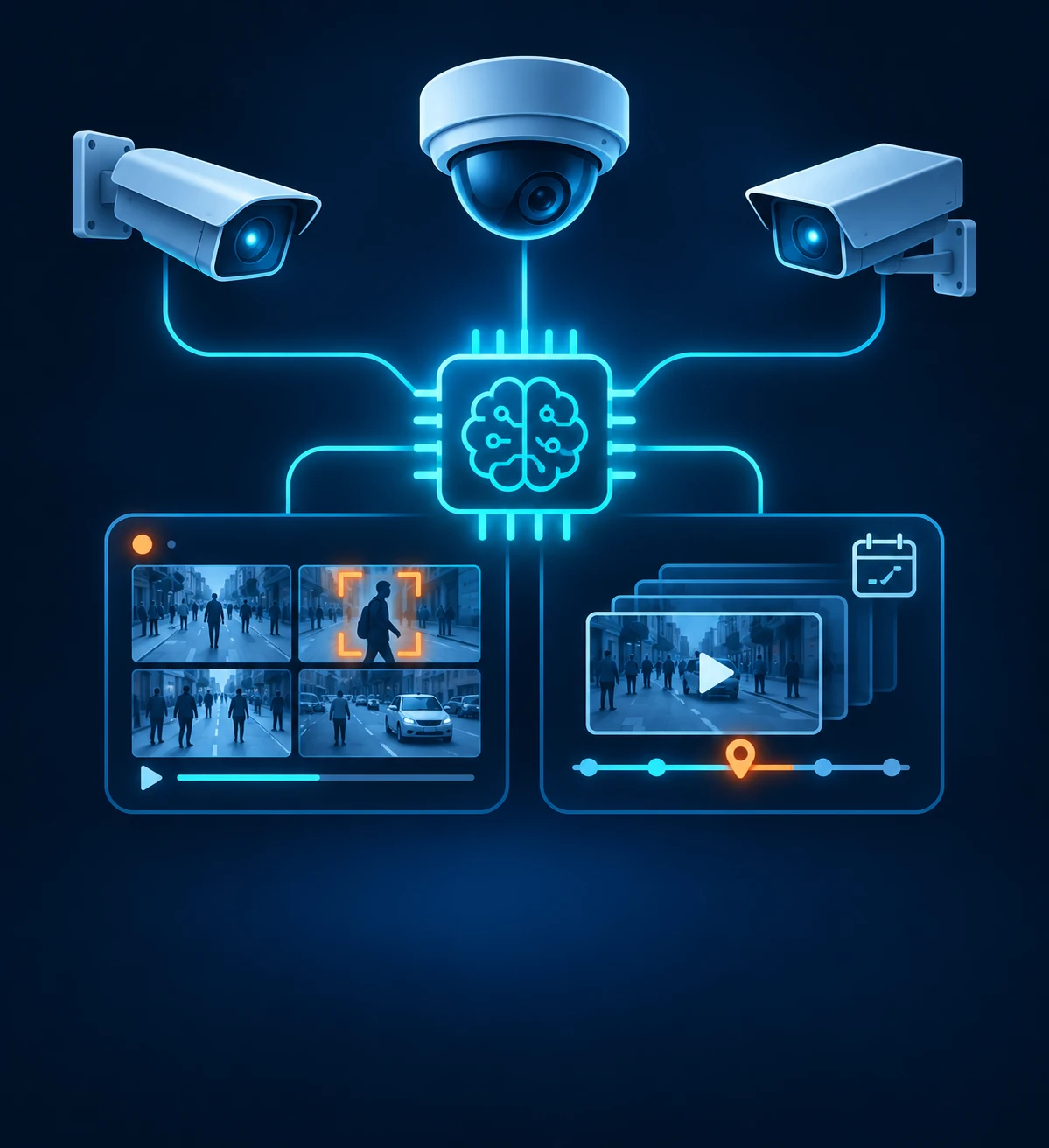
During planned operations the Control Room monitors surveillance cams, operator bodycams, support drone feed. No dispatcher can follow everything by sight for hours. Suspicious movement, the relevant vehicle, access to restricted zones: often discovered after, not live.

Control Room decisions not reaching the individual operator in time
Direction arriving late

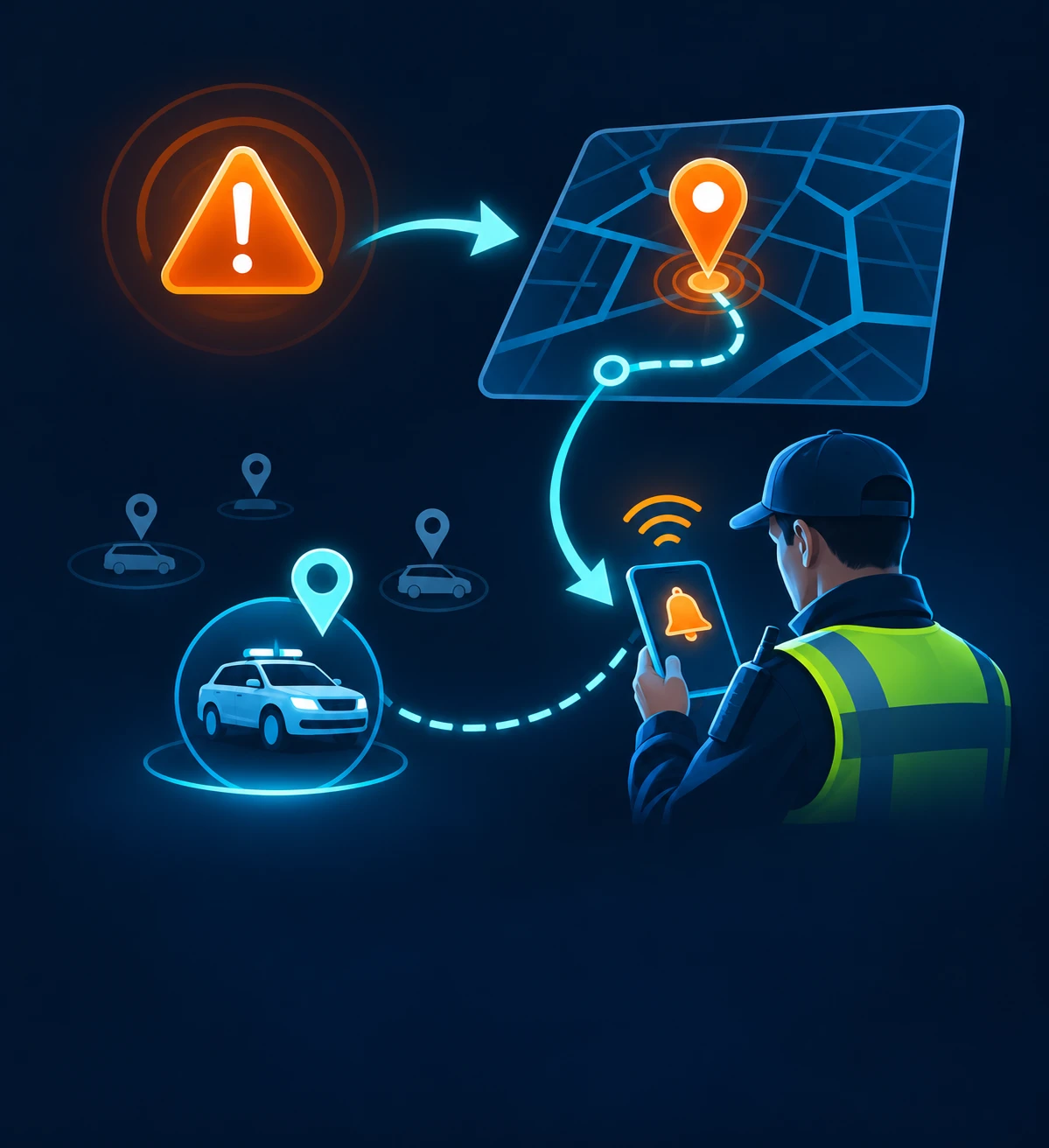
The Control Room decides. The field finds out later.

From decision to the individual operator, minutes.

The operation director has the picture but no direct channel to the individual operator. The order goes via radio broadcast, gets repeated, interpreted. Changing a team's assignment, moving a post, changing target requires long and ambiguous communication cycles.

Manual processes in Control Room with no AI and automation support
Manual processes, no AI

Every check is done by hand.

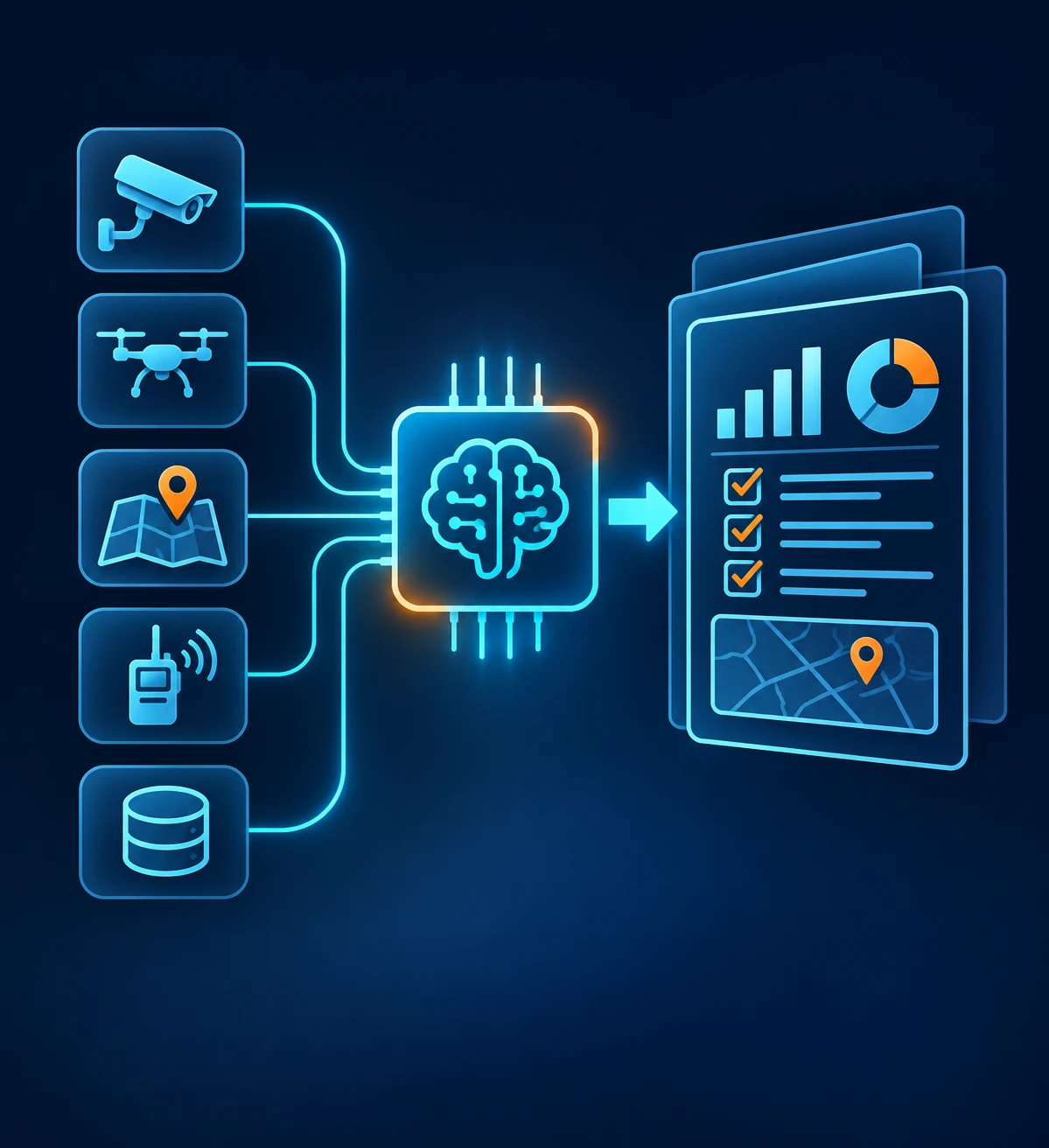
The AI that could help, today is not there.

Line-of-sight checks, correlation across different events, automatic face or vehicle identification, dossier compilation for superiors, prosecutors, audit: all manual. The AI that exists in our units is not integrated in Control Room flows. The director spends hours on work a machine could do instead of coordinating.

How OpNET solves it.

A single platform that holds together operators, known and dynamic targets, cams, 3D line-of-sight and synchronous debriefing. Control room and field see the same picture.

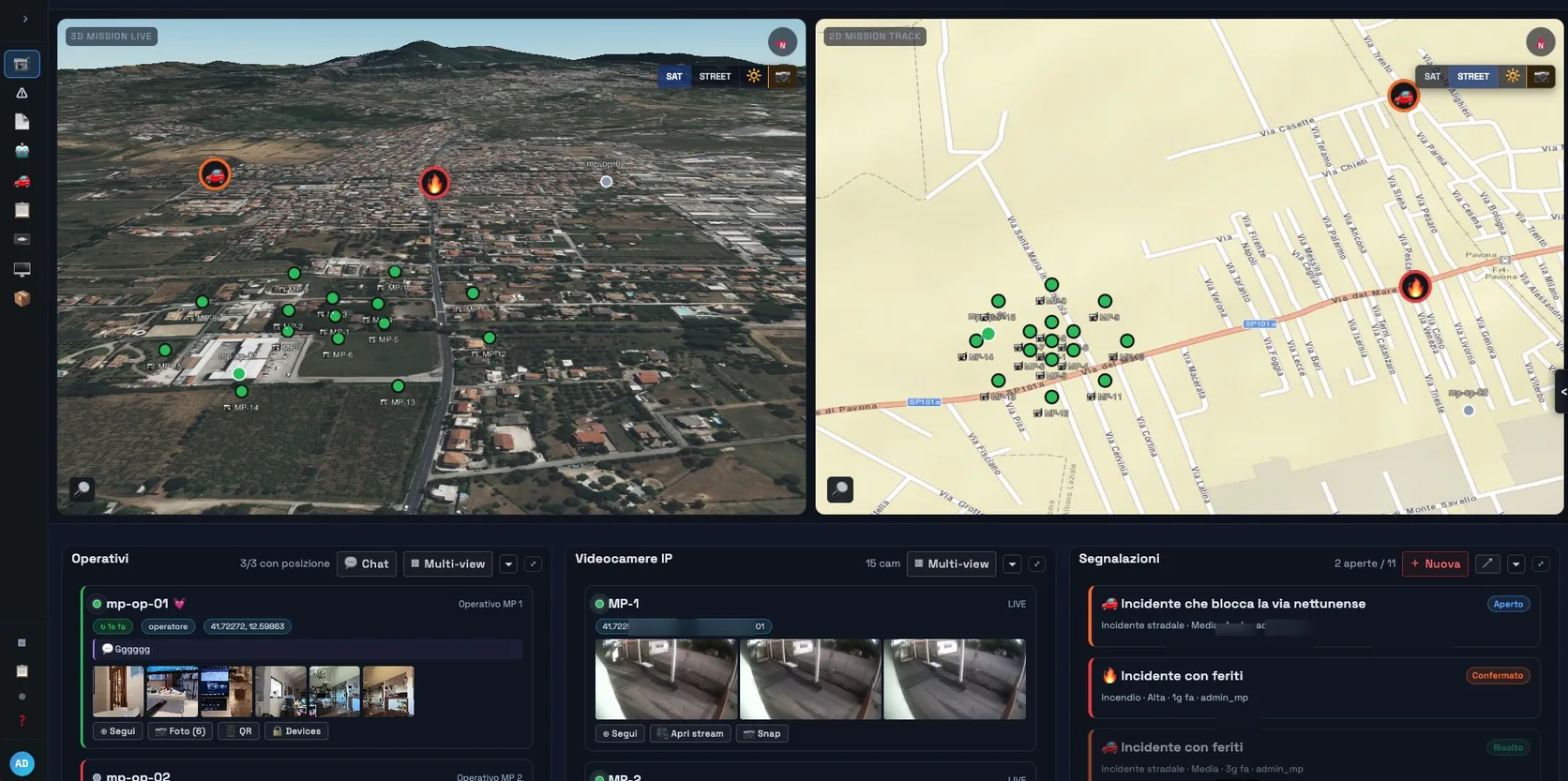
OpNET mission picture for Police Forces operations: 3D map with operators, known and dynamic targets, cams and line-of-sight

Operational mission picture

Operators, targets, cams, line-of-sight: one map.

Control room and field see the same operational picture: operators in position, known targets marked before the operation, dynamic targets that move, live cams on sensitive areas, target building floor plans as georeferenced overlays. No more separate screens.

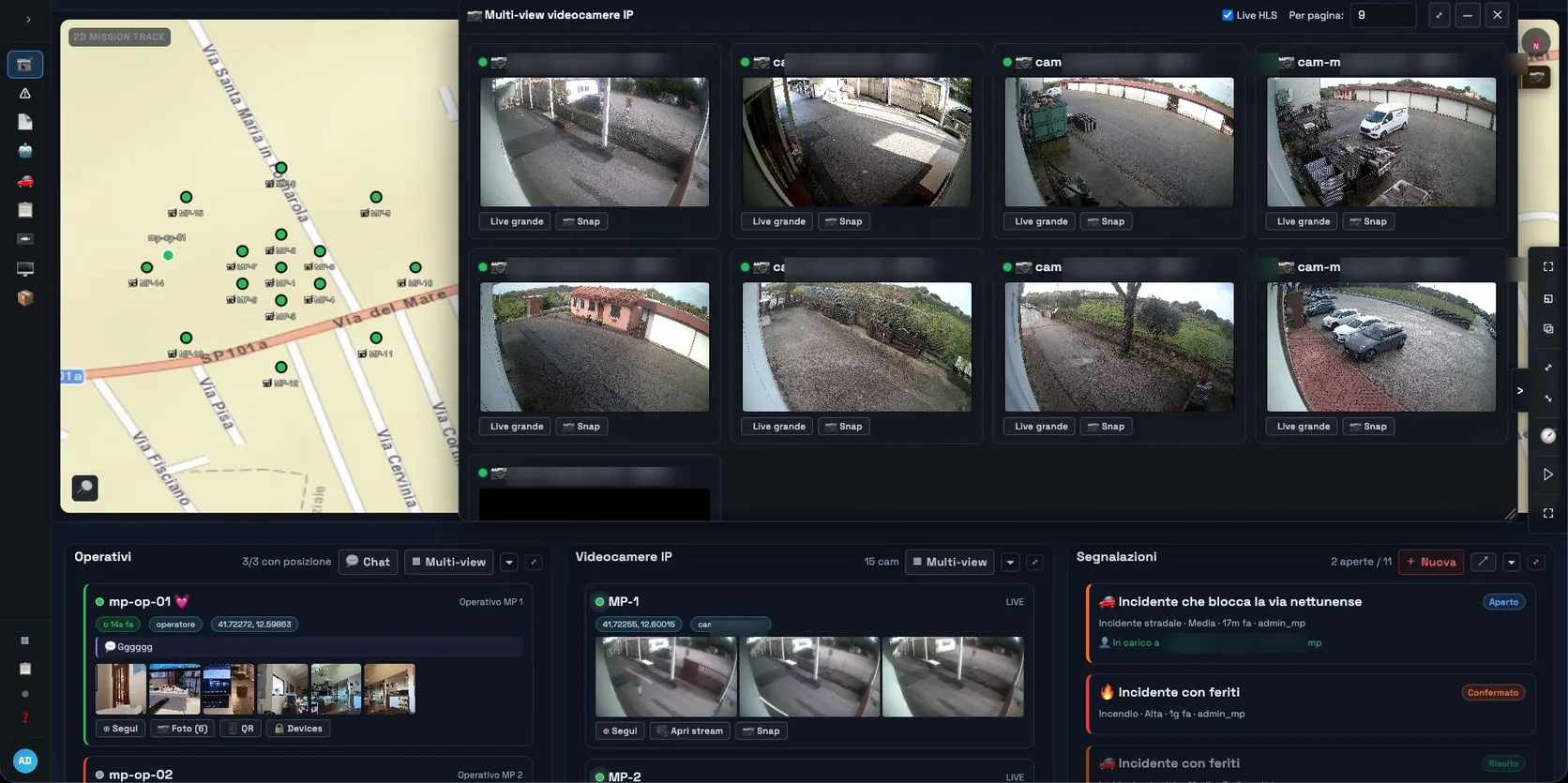
Multi-view surveillance cams + operator bodycams live to the room

Multi-view cams and bodycams

Live feeds on the same wall.

Multi-view grid: fixed surveillance cams, operator bodycams, support drones. The room switches layouts without changing software, can freeze, zoom, compare.

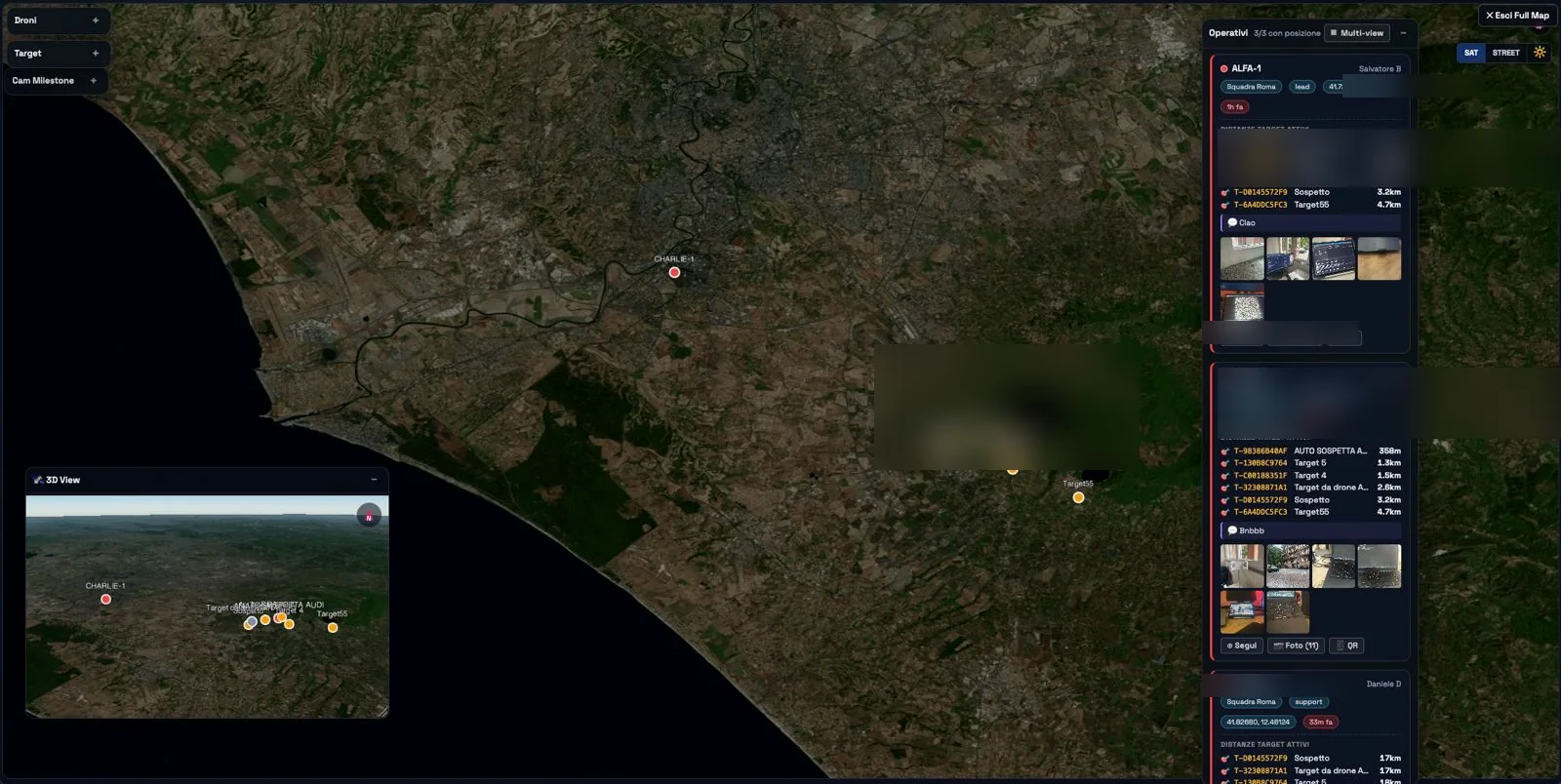
Full Map with multiple operational teams distributed over a wide area, mutual distances between targets computed in real time

Full Map multi-team

Distributed operation, Control Room with the complete picture.

Multiple teams on different areas of the same operation. The Control Room sees all operators, all targets, mutual distances in real time. Zoom-out when overall coordination is needed, zoom-in for tactical detail — without changing software.

Target approval workflow: proposed in the field, pending approval from Control Room, full audit

Target with approval and audit

Every target goes through whoever has decision authority.

A target proposed by a field operator or detected by the drone enters "pending" state before becoming operational. The Control Room approves, rejects or asks for integration. Clear responsibility, tracked in the audit log: who proposed, who approved, when. Zero "ghost" targets on the operational map.

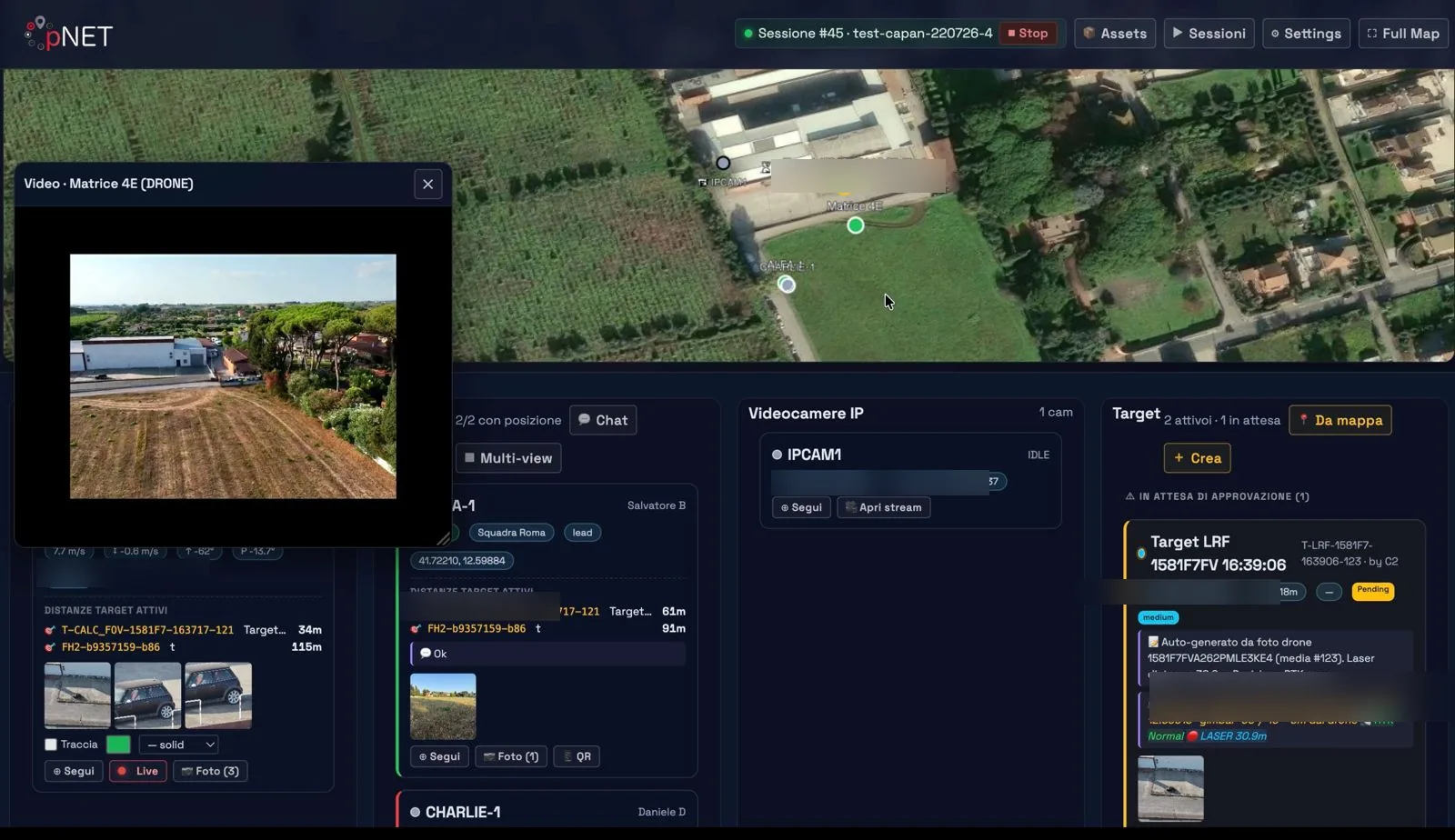
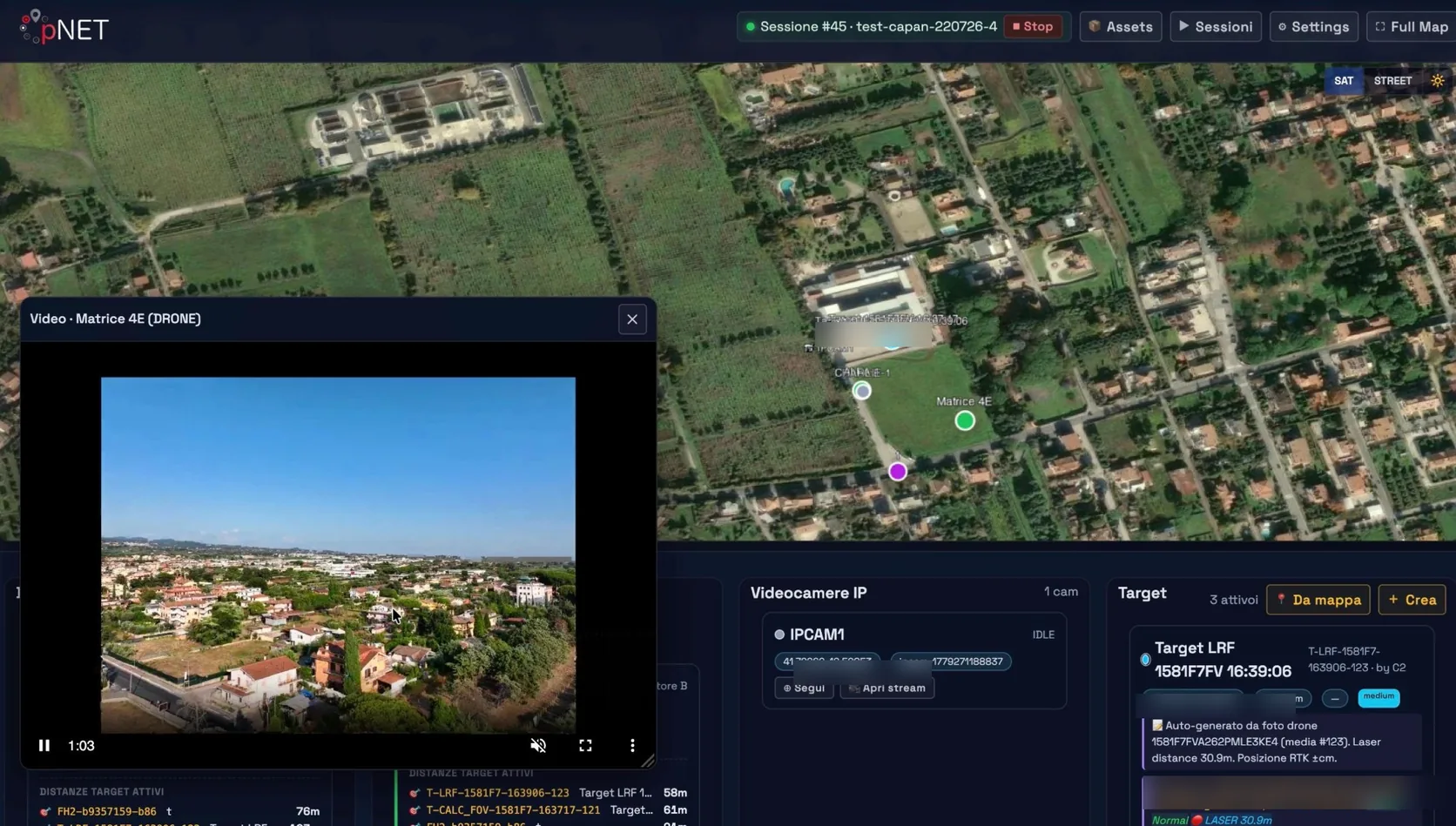
Drone video live to the Control Room + target automatically generated by the laser designator (LRF)

Drone live, automatic target designator

From the flight, to the target, to the operator — no manual steps.

Drone video reaches the Control Room live with no manual download. When the drone marks a target (Laser Range Finder, Field of View), the coordinate automatically flows into the shared mission picture: visible to all operators, approvable by the Control Room, tracked for debriefing.

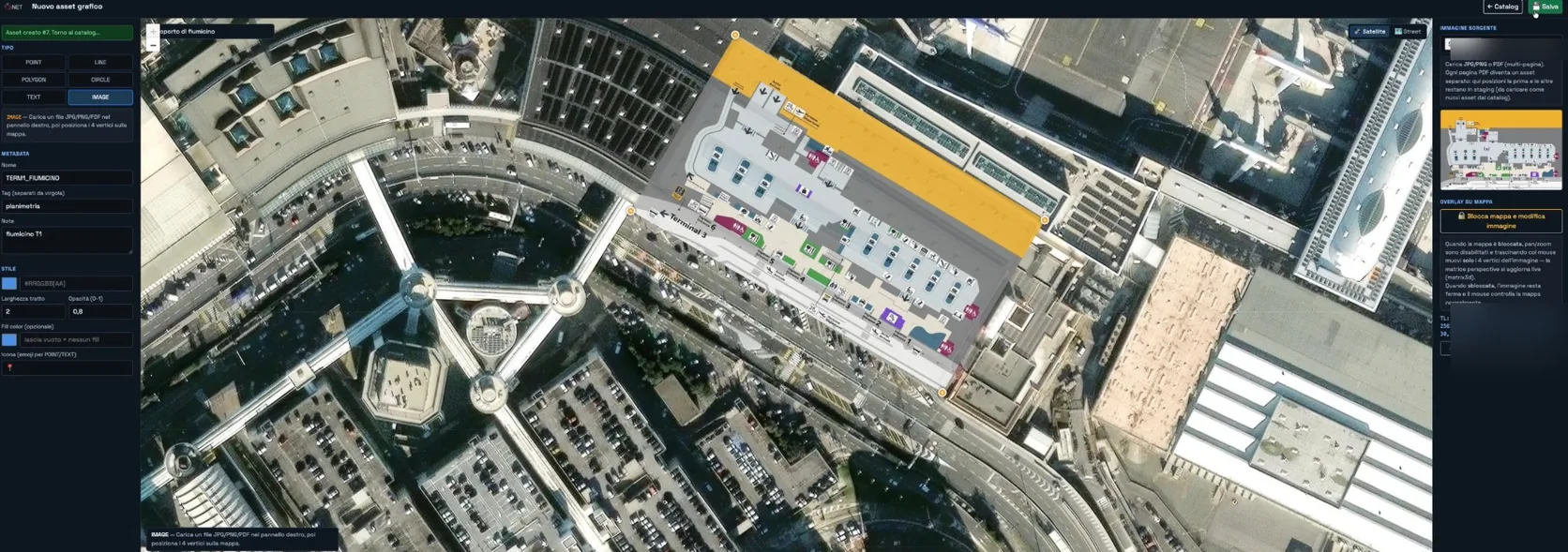
FCO Fiumicino Terminal 3 floor plan positioned as georeferenced overlay on satellite map

Floor plans and maps as overlays

Catalog of building plans on the map, at the right point.

Upload a floor plan (JPG, PNG, PDF), position it with 4 georeferenced vertices on the satellite map. It stays in the organization's asset catalog: the Control Room activates it as overlay when needed, even for a single operation. Terminal plan, target building layout, neighborhood schemes: the field sees what the room sees.

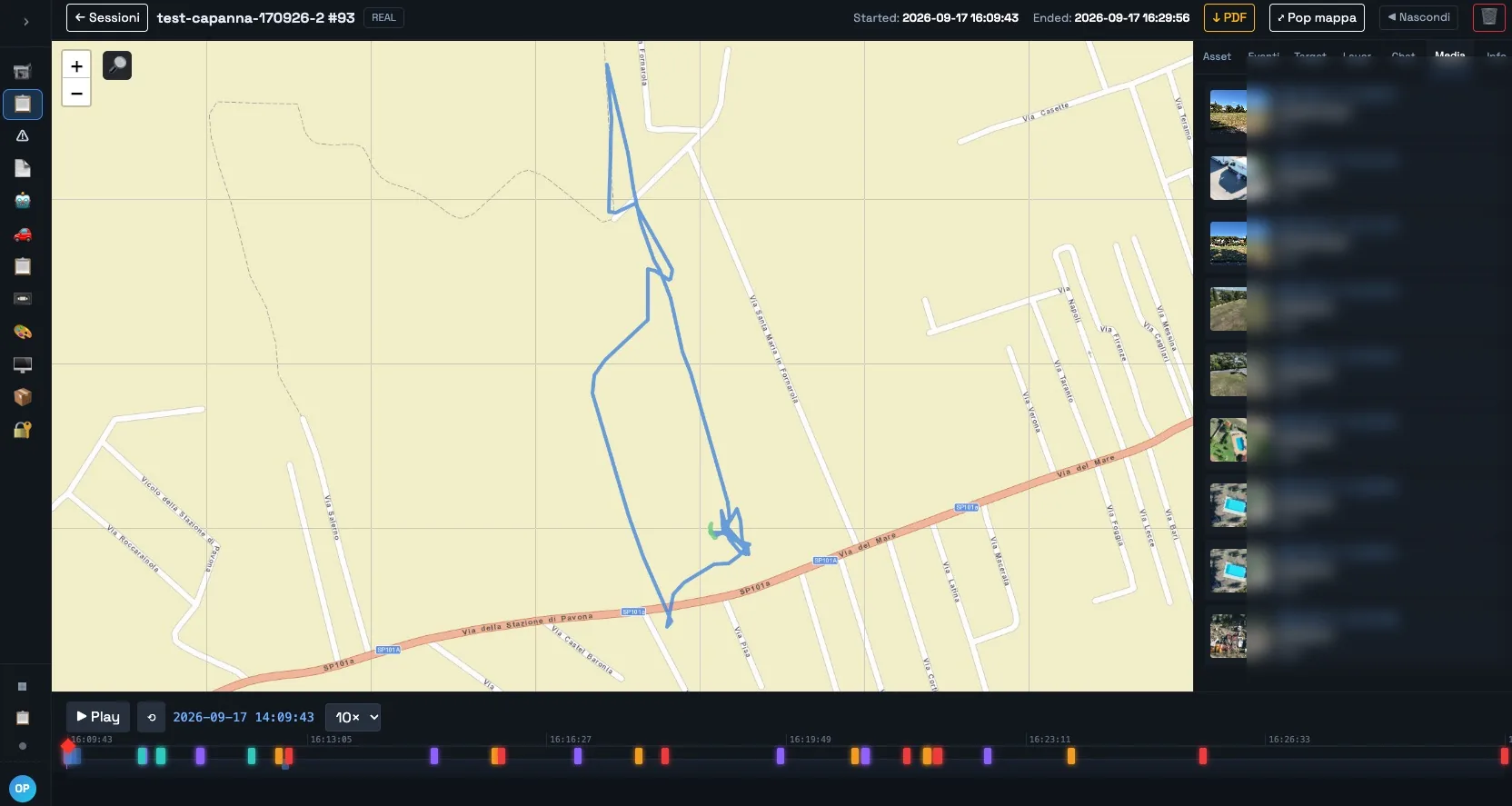
Debriefing session with event timeline, tracked operational path, Media panel and playback controls

Debriefing with synchronous replay

Review the operation, how it really went.

At operation end, open the session in replay mode. Synchronous timeline of operator positions, video feeds, chat, target events. Scroll at 1×, 2×, 10× where needed. Reconstruct the chronology without memory or recollection — everything that happened, when it happened, seen from above.

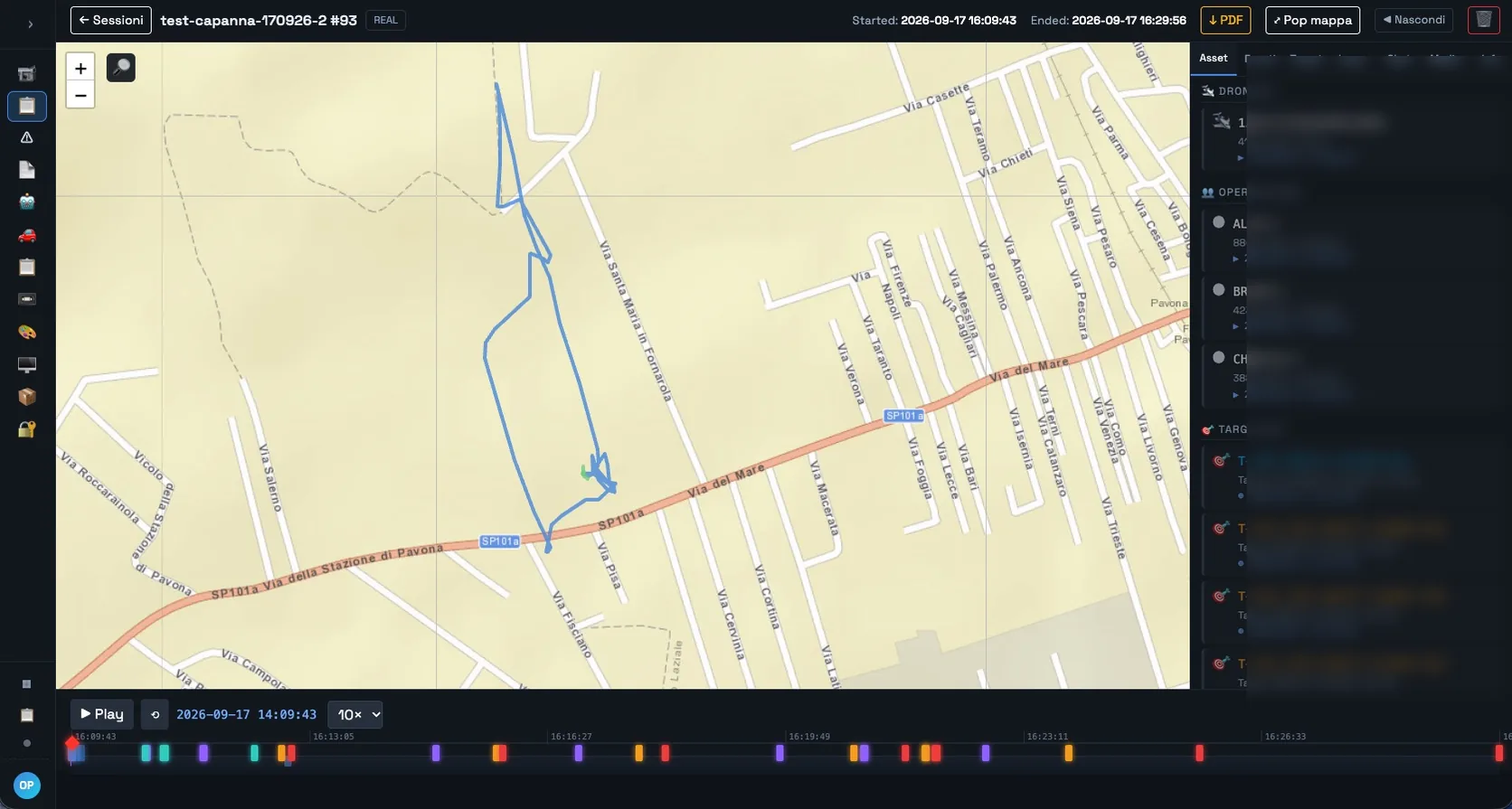
Operation dossier Asset panel: drones, operators, targets, media collected during the session

Complete operation dossier

Drones, operators, targets, media: a single archive.

Every asset involved in the operation stays in the post-session dossier: drones with telemetry, operators with positions and messages, dynamic targets with history, captured media. Exportable for superiors, for prosecutors, for internal audit with one click. The dossier that used to require days of back-office work is now ready.

A unit
on the same map.